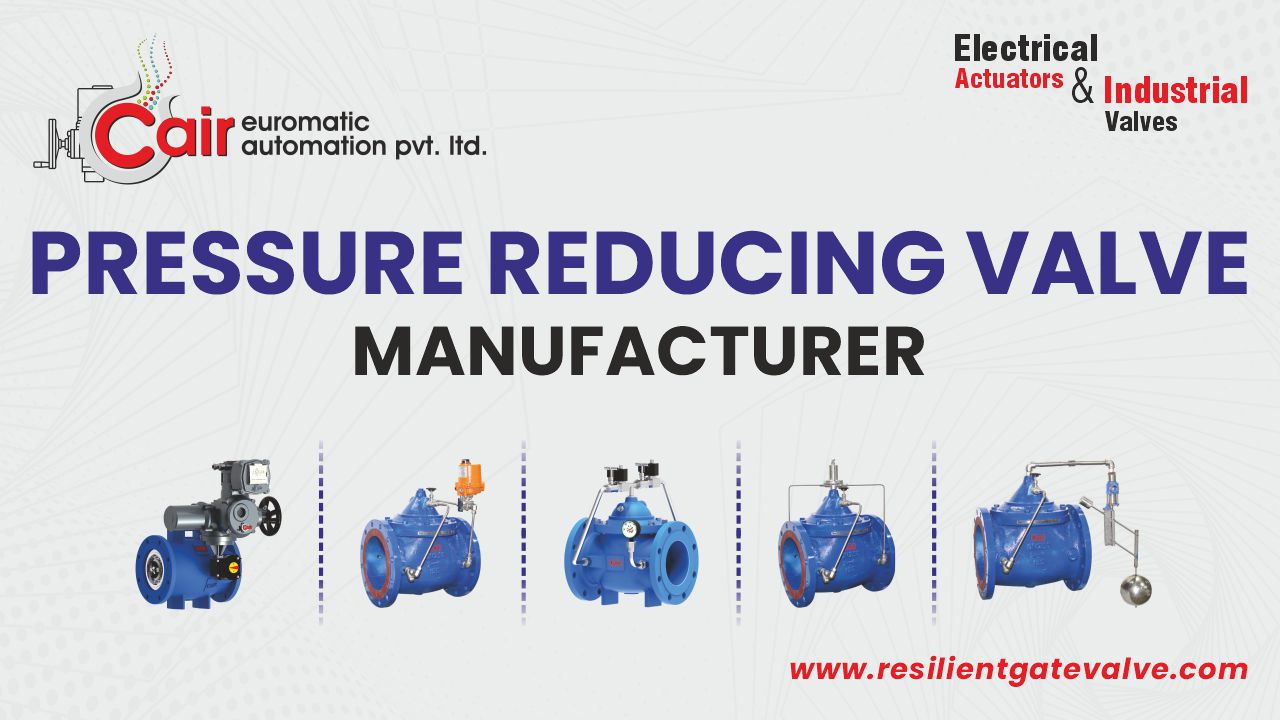
Modern pipeline systems are designed to move fluids efficiently and safely across long distances. Whether it’s water distribution, industrial processing, or commercial infrastructure, maintaining the right pressure inside pipelines is critical. Excess pressure can silently damage pipes, fittings, and valves, leading to costly breakdowns. This is why a Pressure Reducing Valve (PRV) is not just an option—but a necessity—in pipeline systems.
In this article, we’ll explore why pressure reducing valves are essential in pipelines, how they work alongside other flow control valves, and why industries trust Cair Euromatic Automation, a leading Pressure Reducing Valve manufacturer in India, Ahmedabad, for reliable and long-term pipeline solutions.
Understanding Pressure Challenges in Pipelines
Pipelines often operate under fluctuating pressure conditions due to:
-
Changes in flow demand
-
Pump start-stop cycles
-
Elevation differences
-
Long-distance transmission
While high pressure helps transport fluids efficiently, uncontrolled pressure can cause:
-
Pipe leakage and bursts
-
Valve damage
-
Increased water or fluid loss
-
Higher maintenance and repair costs
This is where pressure control becomes essential—and a pressure reducing valve plays a vital role.
What Is a Pressure Reducing Valve?
A Pressure Reducing Valve is an automatic control valve designed to reduce high inlet pressure to a safe, constant outlet pressure. It works continuously without manual adjustment, protecting downstream pipelines and equipment.
Unlike isolation valves, PRVs actively respond to pressure changes, making them a critical component in modern pipeline design.
At Cair Euromatic Automation, we manufacture PRV valves that are robust, accurate, and suitable for long-term pipeline applications across industries.
Why Do Pipelines Need a Pressure Reducing Valve?
1. Protects Pipelines from Damage
Excess pressure is one of the main reasons for pipeline failure. A PRV prevents sudden pressure surges that can crack pipes or weaken joints over time.
2. Ensures Stable and Controlled Flow
Pressure fluctuations can disrupt operations. A pressure reducing valve maintains consistent pressure, ensuring smooth and predictable flow throughout the pipeline.
3. Reduces Leakage and Water Loss
High pressure accelerates leakage at joints and fittings. By reducing pressure, PRVs significantly minimize fluid loss and improve system efficiency.
4. Extends Valve and Equipment Life
Downstream valves such as butterfly valves and non return valves last longer when operating under controlled pressure.
5. Improves System Safety
Stable pressure reduces the risk of sudden pipeline failures, making systems safer for operators and surrounding infrastructure.
How Pressure Reducing Valves Work in Pipelines
Pressure reducing valves operate automatically using an internal diaphragm or piston mechanism.
-
High-pressure fluid enters the valve
-
The valve senses downstream pressure
-
If pressure rises, the valve restricts flow
-
If pressure drops, the valve opens
This self-regulating action ensures pipelines operate within safe pressure limits at all times.
Role of PRVs with Butterfly Valves in Pipelines
In real-world pipeline systems, PRVs work alongside other flow control valves to deliver optimal performance.
Butterfly Valves Commonly Used in Pipelines
Pipeline networks often include:
-
AWWA butterfly valve for municipal and water supply pipelines
-
Double Flanged Butterfly Valve for high-pressure and large-diameter lines
-
Wafer type butterfly valve where compact installation is required
-
Motorized butterfly valve for automated flow regulation
-
Motorized double flange butterfly valve for heavy-duty industrial pipelines
When pressure is properly controlled by a PRV, these butterfly valves operate more efficiently and with less wear.
As a Top Butterfly Valve Manufacturer flow control valve supplier, Cair Euromatic Automation ensures compatibility and performance across all valve types.
Automatic Control Valves and Pressure Regulation
Pressure reducing valves are a key part of automatic control valve systems. These systems respond instantly to pressure changes without human intervention.
Our PRVs are:
-
Automatically operated
-
Designed for continuous pipeline service
-
Suitable for water, industrial fluids, and infrastructure projects
This makes Cair Euromatic Automation a trusted automatic control valve designed leading manufacturer, supplier, and exporter.
Applications of Pressure Reducing Valves in Pipelines
Pressure reducing valves are widely used in:
-
Water transmission pipelines
-
Industrial process pipelines
-
Oil & gas auxiliary systems
-
Fire protection networks
-
Commercial and residential supply lines
They are often paired with non return valves to prevent backflow and protect pumps. As a reliable non return valve manufacturer, we provide complete pipeline valve solutions.
Why Industries Trust Cair Euromatic Automation
Cair Euromatic Automation is your ultimate destination for getting Ahmedabad’s best PRV valve. Our commitment to quality, performance, and customer satisfaction has earned us long-term trust across industries.
Our Commitment to Quality
-
High-grade raw materials
-
Precision manufacturing
-
Strict quality inspections
-
Compliance with industry standards
Our dedication to providing the best value products is clearly reflected in the durability and performance of our valves.
Pressure Reducing Valve Manufacturer in India – Ahmedabad
Being based in Ahmedabad allows us to serve clients efficiently across India and globally. As a Pressure Reducing Valve manufacturer in India, Ahmedabad, we support:
-
EPC contractors
-
Municipal authorities
-
Industrial plants
-
OEMs and exporters
If you are searching to buy a pressure reducing valve near me, near Ahmedabad, or anywhere in India, our technical team is ready to guide you.
Choosing the Right Pressure Reducing Valve for Pipelines
When selecting a PRV, consider:
-
Operating pressure range
-
Pipeline size
-
Type of fluid
-
Flow requirements
-
Automation needs
If you feel confused about product selection or have specific requirements, feel free to connect with our team—we would be more than happy to serve you.
Long-Term Cost Savings with PRVs
Though often overlooked, pressure reducing valves offer excellent return on investment by:
-
Lowering maintenance costs
-
Reducing pipeline failures
-
Improving energy efficiency
-
Extending system lifespan
A properly selected PRV protects not only the pipeline but the entire flow control system.
Final Thoughts
Understanding why you need a pressure reducing valve in pipelines is essential for designing safe, efficient, and durable flow systems. PRVs protect pipelines from excessive pressure, improve system reliability, and enhance the performance of butterfly valves and other flow control components.
At Cair Euromatic Automation, we combine engineering expertise with quality manufacturing to deliver dependable pressure reducing valves and automatic control valve solutions. Whether you want to buy a PRV near Ahmedabad, need technical assistance, or are planning a new pipeline project, our team is always ready to help.