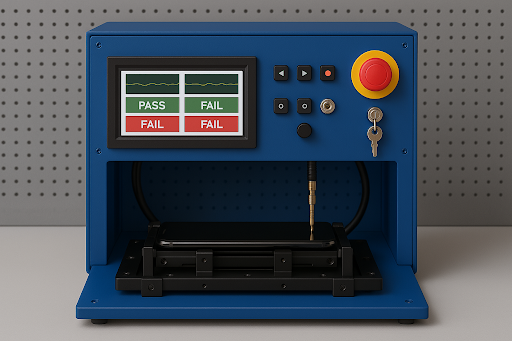
As industries move deeper into digital transformation, testing is no longer just a verification step—it has become a strategic enabler of speed, quality, and innovation. In 2025, the evolution of automated test equipment is being driven as much by software and artificial intelligence as by hardware advancements. From electronics and telecommunications to automotive, aerospace, and education, intelligent testing systems are reshaping how products are developed, validated, and scaled.
Traditional test setups, often rigid and hardware-centric, struggle to keep pace with modern product complexity. Today’s devices are software-defined, highly integrated, and expected to perform flawlessly in dynamic environments. To meet these expectations, testing must be smarter, faster, and more adaptive. This is where advanced software platforms and AI-powered intelligence are redefining the capabilities of modern test systems.
Key Takeaways
-
Software and AI are transforming automated test equipment into intelligent, adaptive systems
-
AI-driven analytics improve test accuracy, speed, and fault detection
-
Software-defined architectures enable flexibility, scalability, and long-term value
-
Organizations can reduce cost, downtime, and time-to-market with smarter test strategies
-
Future-ready test systems depend on seamless integration of hardware, software, and data
Why Software Has Become the Backbone of Modern Test Systems
In the past, test systems were largely controlled by fixed logic and manual configuration. Today, software plays a central role in orchestrating test sequences, managing data, and enabling interoperability across instruments.
Modern test software platforms allow engineers and institutions to design modular test workflows that can be easily updated as requirements change. Instead of replacing entire systems, users can adapt through software updates, new test scripts, or expanded libraries. This shift significantly extends the lifecycle of test investments.
Software-driven test environments also support remote operation, centralized control, and cloud-based data storage. These capabilities are increasingly important as organizations adopt distributed teams, remote labs, and collaborative research models.
The Growing Influence of AI in Test Automation
Artificial intelligence is moving testing from reactive to predictive. Rather than simply reporting pass or fail results, AI-enhanced systems analyze patterns, trends, and anomalies across large datasets.
In modern automated test equipment, AI algorithms can:
-
Detect subtle faults that rule-based systems may miss
-
Predict component failures before they occur
-
Optimize test coverage by identifying redundant or low-value tests
-
Adapt test parameters in real time based on device behavior
This intelligence reduces false failures, improves yield, and shortens debugging cycles. For high-volume manufacturing or complex RF and electronics testing, these benefits translate directly into cost savings and faster product launches.
Handling Increasing Product Complexity
As products integrate more features into smaller form factors, testing becomes exponentially more challenging. Multi-band radios, embedded software, sensors, and connectivity stacks must all be validated together.
Software and AI help manage this complexity by enabling system-level testing rather than isolated checks. AI-driven correlation engines can link failures across subsystems, helping engineers identify root causes faster. Software abstraction layers also simplify integration between diverse instruments, reducing setup time and human error.
This holistic approach is especially valuable in sectors like 5G, IoT, automotive electronics, and advanced research environments.
Benefits of AI-Driven Test Systems
The adoption of software and AI in test environments delivers measurable advantages across the testing lifecycle.
Accuracy improves as AI models learn from historical data and refine measurement thresholds. Efficiency increases because tests can be prioritized, parallelized, or skipped when unnecessary. Reliability is enhanced through continuous monitoring and self-calibration routines managed by software intelligence.
Perhaps most importantly, AI enables scalability. As test volumes grow or requirements evolve, intelligent systems adapt without proportionally increasing cost or manpower.
Challenges in Adopting Software- and AI-Based Testing
Despite the advantages, adopting intelligent test systems is not without challenges. One common concern is data quality. AI models are only as effective as the data they are trained on, making proper data management essential.
Integration complexity can also be a hurdle, particularly when legacy instruments and proprietary systems are involved. Organizations must ensure that software platforms support open standards and interoperability.
Finally, there is the skills gap. Engineers and educators may need training to fully leverage AI-driven features. However, many modern platforms are designed with user-friendly interfaces and guided workflows to lower the learning curve.
Best Practices for Selecting and Implementing Intelligent Test Solutions
To maximize value from modern automated test equipment, organizations should take a strategic approach.
Start by assessing long-term needs rather than immediate requirements. A software-defined system that supports future expansion will deliver better ROI than a rigid setup.
Prioritize platforms with strong analytics, automation, and AI integration. Look for systems that offer centralized data management and support for remote access.
Equally important is vendor expertise. A solution provider with experience across industries can offer insights, customization, and ongoing support that go beyond the hardware itself.
Finally, invest in training. Empowering teams to understand and trust AI-driven recommendations ensures smoother adoption and better outcomes.
The Role of Data in Smarter Testing
Data is the fuel that powers intelligent test systems. Modern test software collects not only results, but also metadata such as environmental conditions, configuration details, and historical trends.
AI uses this data to uncover insights that would be impossible to detect manually. Over time, test systems become more accurate and efficient, learning from every cycle.
This data-centric approach also supports compliance, traceability, and reporting—critical requirements in regulated industries and academic research environments.
Preparing for the Future of Test Automation
Looking ahead, the role of software and AI will only grow. Digital twins, virtual test environments, and self-healing test systems are already emerging. These technologies will further reduce physical testing requirements while improving confidence in results.
As products become more software-defined, testing must follow the same path. Intelligent automation is no longer optional—it is foundational to innovation.
Frequently Asked Questions
How does AI improve automated test accuracy?
AI analyzes large volumes of test data to identify patterns, anomalies, and trends that traditional rule-based systems may overlook. This leads to more precise fault detection and fewer false failures.
Is AI-based testing suitable for small labs or educational institutions?
Yes. Many modern systems are scalable and modular, allowing institutions to start small and expand over time while benefiting from intelligent automation.
Can software-defined test systems work with existing hardware?
In most cases, yes. Open architectures and standardized interfaces allow modern test software to integrate with legacy instruments, protecting previous investments.
What industries benefit most from AI-driven testing?
Telecommunications, electronics manufacturing, automotive, aerospace, and research institutions see significant benefits due to high complexity and data volume.
Does AI replace human test engineers?
No. AI augments human expertise by handling repetitive analysis and data processing, allowing engineers to focus on decision-making and innovation.
How long does it take to see ROI from intelligent test systems?
Organizations often see benefits within months through reduced test time, improved yield, and lower operational costs, especially in high-volume or complex testing environments.
Moving Toward Smarter, Future-Ready Testing
The integration of software and AI is redefining what test systems can achieve. Intelligent automation empowers organizations to test faster, smarter, and with greater confidence—while remaining adaptable to future demands.
For organizations looking to adopt or upgrade modern automated test equipment, partnering with an experienced and forward-thinking provider is essential. Orbis Systems brings deep expertise, innovation, and a proven track record in delivering advanced, software-driven test solutions that help customers stay ahead in an increasingly complex testing landscape.