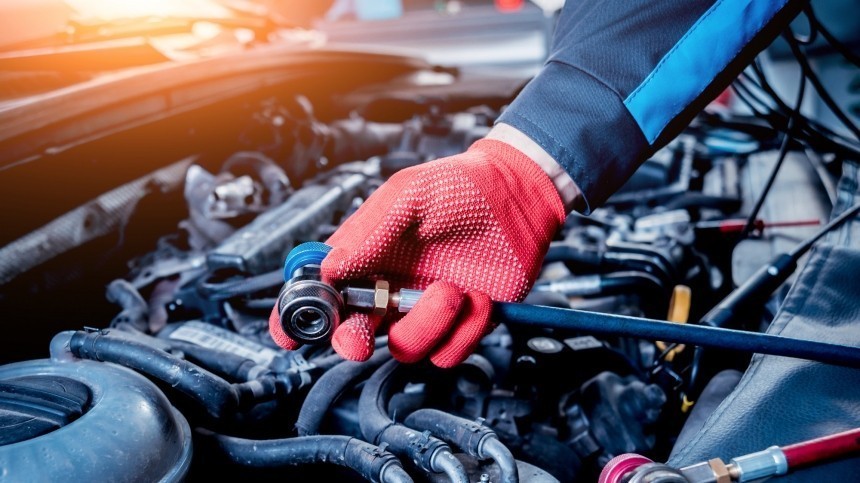
The internal combustion engine is a machine defined by conflict. It is a device that harnesses the violence of explosions to create orderly motion, generating temperatures that would melt its own constituent parts if left unchecked. The cooling system is the only mediator in this conflict, a complex hydraulic circuit responsible for maintaining the thermal equilibrium that allows aluminum, steel, and plastic to coexist under extreme stress. When we think of a cooling system failure, the immediate image is the cliché of a car stranded on the highway shoulder, steam billowing from the hood in a dramatic display of defeat. However, this visible spectacle is merely the final act of a much longer, silent tragedy. The true dangers of a faulty cooling system are rarely so theatrical or immediate; they are insidious, microscopic, and systemic, eating away at the vehicle’s longevity and safety long before the temperature gauge hits the red zone.
A compromised cooling system does not simply mean the engine runs hot; it means the engine’s operating environment has fundamentally changed. The hidden dangers lie in the cascading effects of this thermal instability. Modern engines are built with incredibly tight tolerances, relying on specific thermal expansion rates to seal combustion chambers and lubricate bearings. When the cooling system operates at sub-optimal efficiency—whether due to old fluid, a weak pump, or a minor leak—these tolerances are disrupted. The result is not always a sudden breakdown but a slow, irreversible degradation of the engine’s core components. This article moves beyond the basic mechanics of overheating to explore the hidden, structural, and chemical threats posed by a neglected cooling architecture.
The Toxic Breach of the Passenger Sanctuary
One of the most overlooked aspects of automotive design is how intimately the engine’s thermal management interacts with the passenger cabin. We often perceive the firewall as an impenetrable barrier separating the mechanical noise and heat from the occupants, but the heating system punches a direct hole through this defense. The heater core, essentially a small radiator buried deep within the dashboard, circulates hot engine coolant to warm the interior air. When the cooling system is neglected, the coolant becomes corrosive, attacking the thin aluminum walls of the heater core. A failure here is not just a mechanical issue; it is an environmental hazard for the driver and passengers.
When a heater core develops a pinhole leak, it atomizes the coolant into a fine, often invisible mist that is blown directly into the cabin through the vents. This creates a sweet, sickly smell, but the implications are far more severe than an unpleasant odor. Ethylene glycol, the active ingredient in antifreeze, is a toxic substance. Breathing these fumes in a confined space like a car interior can lead to respiratory irritation, dizziness, and headaches, mimicking the effects of motion sickness or fatigue. Furthermore, this vapor coats the interior of the windshield in a greasy, fog-like film that is nearly impossible to remove with standard defrosters. In this scenario, the Air Conditioning & Cooling System are no longer just climate control devices; they become a mechanism for distributing hazardous chemical vapors directly into your breathing zone, compromising driver alertness and visibility in a way that is rarely diagnosed until the leak becomes catastrophic.
The Strawberry Milkshake of Death: Transmission Destruction
Perhaps the most financially devastating “hidden” danger of a cooling system fault has nothing to do with the engine itself, but rather with the transmission. In the majority of automatic vehicles, the transmission fluid is cooled by a special heat exchanger located inside the main radiator tank. This design is efficient for packaging, utilizing the radiator’s airflow to cool both the engine coolant and the transmission fluid simultaneously. However, it creates a single point of failure that can destroy the drivetrain in seconds.
If the internal barrier separating the transmission cooler from the main radiator tank corrodes or cracks, the two fluids mix. Since the cooling system is pressurized, engine coolant is forced into the transmission lines. Coolant is the mortal enemy of a transmission. It dissolves the glue that holds the friction clutches together and strips the varnish off the delicate electronic solenoids. The resulting mixture creates a frothy, pink emulsion often referred to by mechanics as the “strawberry milkshake of death.” This failure mode is silent; there is often no overheating of the engine and no external leak. The driver continues to drive until the transmission begins to slip or shudder. By the time the symptoms are felt, the damage is total. The clutches have disintegrated, and the transmission requires a complete rebuild or replacement. A simple radiator neglect thus metastasizes into a repair bill that often exceeds the value of the car.
Chemical Erosion and the Electrolysis Battery
We tend to think of the cooling system as a plumbing network, but it is also a chemical environment. Fresh coolant contains vital corrosion inhibitors that coat the internal metal surfaces, preventing rust and oxidation. Over time, however, these additives are depleted. When coolant is left unchanged for years, it doesn’t just lose its protective qualities; it undergoes a chemical transformation. The ethylene glycol breaks down into glycolic and formic acids, dropping the pH level of the fluid. The coolant effectively turns into a slow-acting acid that eats away at gaskets, water pump impellers, and the cylinder head itself.
Even more insidious is the phenomenon of electrolysis. As the coolant becomes acidic, it becomes an electrical conductor. A modern engine is made of dissimilar metals—cast iron blocks, aluminum heads, copper brass sensors, and steel bolts. When submerged in an acidic, conductive fluid, these metals create a galvanic battery. Stray electrical currents from the vehicle’s grounding system can travel through the coolant, stripping ions away from the softer metals. This is not simple rust; it is electrochemical machining. You might find that your aluminum radiator or heater core develops pinhole leaks from the inside out, or that the water pump impeller has virtually dissolved, losing its fins. This invisible electrical erosion weakens the structural integrity of the cooling components, turning them into eggshells waiting to crack under pressure.

The Viscosity Breakdown and Oil Dilution
The relationship between the cooling system and the lubrication system is critical. Motor oil is designed to operate within a specific temperature window. If a faulty thermostat or a clogged radiator causes the engine to run hotter than its design specification—even if it doesn’t reach the point of “overheating” on the gauge—the oil is subjected to thermal stress. Excessive heat causes oil to oxidize and thin out, reducing its viscosity. Thinned oil cannot maintain the protective hydrodynamic film required to keep metal parts from touching. This leads to accelerated wear on cam lobes, crankshaft bearings, and piston rings.
Conversely, a cooling system that fails to warm the engine up (a thermostat stuck open) poses a different but equally dangerous threat. Engines are designed to run hot enough to evaporate the condensation and unburnt fuel that naturally accumulate in the crankcase during combustion. If the engine constantly runs too cool, these contaminants remain in the oil. The fuel dilution washes the oil off the cylinder walls, leading to “bore wash” and scoring of the cylinder liners. The water accumulation leads to sludge formation, which can block oil passages and starve the top end of the engine of lubrication. Thus, a cooling system fault often disguises itself as an oil consumption problem or a lubrication failure, leading owners to treat the symptom (adding oil) rather than the root cause (thermal mismanagement).
Thermal Shock and Metallurgical Fatigue
Metal has a memory. Every time an engine heats up and cools down, the metal expands and contracts. Engineers design engines to withstand these cycles, but only within a specific thermal range. A faulty cooling system introduces the element of thermal shock. Consider a scenario where a water pump is failing intermittently, or an air pocket is trapped in the cylinder head. These issues create “hot spots”—localized areas of extreme heat that the temperature sensor, usually located elsewhere, may not register.
When a localized area of the aluminum cylinder head reaches extreme temperatures while the surrounding metal remains cooler, the differential expansion creates immense internal stress. This can cause the head to warp, lifting it slightly off the engine block. The head gasket, which seals the combustion pressure, cannot maintain a seal against this warping. The result is a blown head gasket, but the root cause is the uneven cooling. Furthermore, rapid cooling—such as pouring cold water into an overheated radiator—shocks the metal, causing immediate cracking. These metallurgical failures are cumulative. A car that has been allowed to run slightly hot for months is accumulating fatigue in the metal crystalline structure, making it prone to catastrophic cracking that seems to happen “out of the blue” but is actually the result of long-term thermal abuse.
The Catalytic Converter and Sensor Feedback Loops
The dangers of a cooling system extend to the vehicle’s emissions and engine management systems. The Engine Control Unit (ECU) relies heavily on data from the Coolant Temperature Sensor (CTS) to determine how much fuel to inject. In the days of carburetors, a choke was used to enrich the mixture for a cold start. Today, the ECU does this electronically. If a faulty thermostat prevents the engine from reaching operating temperature, or if a failing sensor gives a false “cold” reading, the ECU will keep the engine in “open loop” mode.
In this mode, the computer commands a rich fuel mixture, dumping excess gasoline into the cylinders to sustain combustion in a supposedly cold engine. This excess fuel does not all burn; much of it is pushed out into the exhaust system, where it enters the catalytic converter. The converter is designed to process exhaust gases, but it cannot handle raw fuel. The fuel ignites inside the converter, superheating the ceramic substrate and melting the precious metals inside. A clogged or melted catalytic converter creates excessive backpressure, choking the engine and leading to a severe loss of power. Thus, a simple cooling system part like a $20 thermostat can ruin a $1,000 catalytic converter, a connection that few drivers make until the damage is done.
The Compromise of Plastic Structural Integrity
In the pursuit of fuel efficiency and weight reduction, modern automotive manufacturers have largely replaced metal cooling components with composite plastics. Radiator end tanks, thermostat housings, and intake manifolds are now commonly made of glass-filled nylon. While strong, these materials have a finite lifespan that is directly dictated by thermal stability. Heat cycling eventually drives the plasticizers out of the material, making it brittle and prone to cracking.
A cooling system that runs hotter than intended accelerates this embrittlement process significantly. The plastic turns from a durable material into something resembling hard candy. The danger here is the suddenness of failure. Unlike a metal component that might weep or drip for weeks before failing, a heat-stressed plastic intake manifold or radiator neck can snap off completely without warning, dumping the entire coolant capacity of the engine in seconds. This total loss of fluid leads to a seizure event almost instantly at highway speeds. The hidden danger is that the plastic components may look perfectly fine externally while being structurally compromised internally due to chronic thermal stress, turning the vehicle into a ticking time bomb.
Fire Hazards and Fluid Flammability
While water is the primary component of the cooling mixture, the ethylene glycol and additives are organic chemicals. We rarely think of coolant as a fire hazard, but under the specific conditions created by a system failure, it can be. Pure ethylene glycol has a flash point, and while it is mixed with water, the water can boil off when sprayed onto a superheated surface, leaving a concentrated, flammable residue.
If a hose bursts or a radiator tank cracks, spraying coolant onto a red-hot exhaust manifold or turbocharger housing, the water evaporates instantly, and the remaining glycol can ignite. While coolant fires are less common than fuel fires, they are insidious because they often occur after the engine has been turned off, and the “heat soak” raises the under-hood temperatures. Additionally, the steam generated from a burst hose is not just hot water vapor; it is a pressurized cloud of chemical gas that can cause severe thermal and chemical burns to anyone standing nearby with the hood open. The danger is not just to the machine, but to the operator who might underestimate the volatility of the pressurized, superheated fluid.
Conclusion
The cooling system is frequently dismissed as a secondary support system, noticed only when it fails to perform its primary duty. This perspective is dangerous because it ignores the deep integration of thermal management into every other facet of the vehicle’s operation. A faulty cooling system is not an isolated ailment; it is a systemic infection. It poisons the cabin air, corrodes the transmission, dilutes the oil, confuses the computer, and fatigues the metal bones of the engine itself.
Recognizing these hidden dangers shifts the narrative from reactive repair to proactive guardianship. The cost of a coolant flush, a new thermostat, or a proactive hose replacement is negligible compared to the devastation of a transmission rebuild, a warped cylinder head, or a melted catalytic converter. By understanding that heat is the ultimate enemy of mechanical longevity, and that the cooling system is the only defense against this enemy, vehicle owners can appreciate the critical nature of this hydraulic loop.