Introduction
In today’s fast-paced industrial world, surface protection films play a crucial role in preserving the quality and appearance of products during manufacturing, transportation, and installation. Whether used on glass, metal, plastic, or painted surfaces, these films prevent scratches, dust, and contamination while ensuring the product remains pristine until it reaches the end user. The demand for high-quality surface protection films has grown significantly, driven by the automotive, electronics, and construction sectors.
What Is a Surface Protection Film?
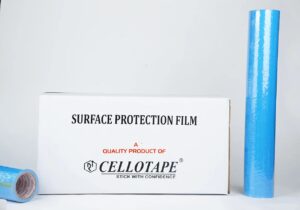

A surface protection film is a temporary adhesive film applied to protect surfaces from damage during handling, assembly, or shipping. These films are typically made from polyethylene (PE), polypropylene (PP), or PVC materials, depending on the required level of protection.
They come in various thicknesses, colors, and adhesive strengths — ranging from low-tack for delicate surfaces to high-tack for rugged materials. The primary goal is to shield surfaces from scratches, dirt, UV rays, and minor abrasions without leaving any residue after removal.
Manufacturing Process Overview
The process of surface protection film manufacturing involves precision engineering and quality control to achieve consistent performance. Below is a general overview of how these films are made:
1. Raw Material Selection
The process begins with the careful selection of high-grade polyethylene (PE), polypropylene (PP), or polyethylene terephthalate (PET) resins. These raw materials are selected based on the film’s intended application — for example, PE is preferred for flexibility and cost-effectiveness, while PET is chosen for high optical clarity and mechanical strength.
Additives such as UV stabilizers, anti-static agents, and slip modifiers are often blended with the base resin to enhance properties like UV resistance, easy unwinding, and smooth surface texture. The purity and consistency of these resins directly affect the transparency and protective performance of the final product.
2. Film Extrusion
Once the raw material is prepared, it is melted and extruded into thin sheets using either cast film extrusion or blown film extrusion techniques.
-
Cast Film Extrusion: Involves passing molten resin through a flat die onto a chilled roller, creating films with superior clarity and uniform thickness.
-
Blown Film Extrusion: In this method, molten resin is extruded through a circular die and inflated into a tubular film bubble, resulting in strong and flexible films with good tear resistance.
During this stage, parameters like temperature, melt flow rate, film gauge, and line speed are carefully controlled to maintain consistency. The resulting film base is smooth, transparent, and ready for coating.
3. Adhesive Coating
After extrusion, the film passes through a coating station where a thin, uniform layer of pressure-sensitive adhesive (PSA) is applied on one side.
This adhesive determines the film’s bonding characteristics — whether it needs to adhere strongly to metal surfaces or lightly to delicate materials like glass or painted panels.
Different coating techniques are used, such as gravure coating, Mayer rod coating, or slot die coating, depending on the viscosity and type of adhesive used. The adhesive is usually water-based or solvent-free to ensure eco-friendly production and safe application.
4. Curing and Drying
Once the adhesive is applied, the film enters a curing or drying chamber to remove moisture or solvents and activate bonding properties. Controlled temperature and airflow ensure the adhesive cures evenly across the entire surface.
This step is vital for maintaining stable tack levels, peel strength, and clean removability. Improper curing can lead to uneven adhesion or residue upon removal, which is why precision temperature control is essential.
5. Slitting and Rewinding
After curing, the large master roll of adhesive-coated film is transferred to a slitting machine, where it is cut into smaller rolls of precise width and diameter.
The rewinding process ensures smooth, wrinkle-free rolls that can be easily handled during packaging and application. Some manufacturers also include an inline inspection system that detects defects such as pinholes, uneven coating, or surface contamination before final packaging.
6. Quality Testing and Control
Throughout the entire process, manufacturers conduct multiple quality control checks to ensure that every roll meets industry standards. Common tests include:
-
Adhesion and peel strength testing using standardized instruments.
-
Optical clarity and haze measurement to verify transparency.
-
Tensile and elongation testing to evaluate flexibility and resistance.
-
Temperature and UV exposure tests for durability in real-world conditions.
-
Residue-free removal tests to confirm clean detachment from surfaces.
High-quality surface protection films are those that maintain consistent adhesion, resist tearing or curling, and can be removed easily without damaging the underlying surface.
7. Packaging and Storage
Finally, the slit rolls are labeled, shrink-wrapped, and packed in moisture-resistant materials to preserve their adhesive properties. Proper storage conditions — typically cool and dry environments — are essential to extend the shelf life of the film.
Throughout the process, quality tests ensure that the film maintains consistent adhesion, clarity, and tensile strength.
Types of Surface Protection Films
-
PE Surface Protection Film:
Lightweight, flexible, and ideal for protecting plastic sheets, laminates, and stainless steel. -
PVC Surface Protection Film:
Known for higher durability and UV resistance, often used for outdoor applications. -
PET Surface Protection Film:
Offers excellent clarity and is commonly used in electronics, displays, and automotive interiors. -
Co-extruded Films:
Multi-layer films that combine different materials for enhanced protection and performance.
Applications Across Industries
-
Automotive: Protects painted panels, bumpers, dashboards, and trims during assembly and transport.
-
Electronics: Used on display screens, glass panels, and touch surfaces to prevent dust and scratches.
-
Construction: Shields aluminum, stainless steel, glass, and marble surfaces during installation.
-
Furniture & Interior Design: Keeps decorative laminates and wooden panels clean and intact.
-
Appliances: Applied on refrigerators, washing machines, and air conditioners to preserve surface finish.
Each application requires a customized film with the right adhesive strength and material compatibility.
Key Characteristics of Quality Protection Films
A good surface protection film should:
-
Adhere smoothly without bubbles or wrinkles.
-
Be easy to peel off without residue.
-
Resist moisture, UV light, and temperature changes.
-
Offer high transparency for visual inspection of protected surfaces.
-
Maintain consistent adhesion throughout its usage period.
Manufacturers often conduct lab-based peel tests and environmental simulations to ensure these standards are met.
Sustainability and Future Trends
The industry is steadily moving toward eco-friendly and recyclable protection films. With rising environmental awareness, many manufacturers are adopting biodegradable resins and solvent-free adhesives. Recyclable polyethylene films are gaining popularity due to their reduced carbon footprint and reusability.
Moreover, smart surface protection films — with anti-static or UV-blocking properties — are emerging as advanced solutions for sensitive products. These innovations reflect how the sector is blending functionality, sustainability, and efficiency in modern manufacturing.
Conclusion
Surface protection film manufacturing is a highly specialized process that blends material science, precision coating, and quality control. As industries continue to focus on improving product quality and reducing damage during handling, the role of surface protection films will only become more significant.
Understanding the materials, production methods, and applications of these films helps industries choose the right solutions for their specific needs — ensuring safety, quality, and sustainability every step of the way.