
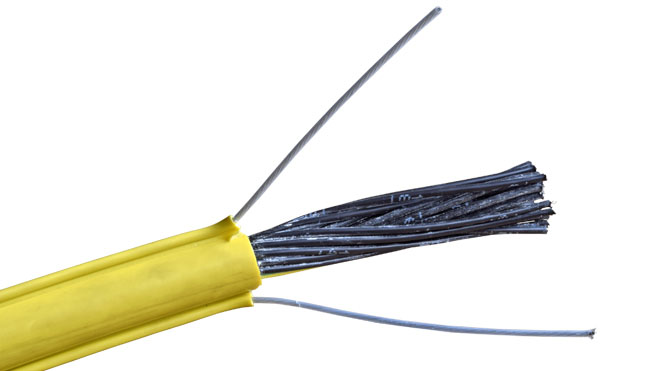
In today’s industrial plants, the unequivocal trend towards automation and wireless control systems cannot be denied. Wireless remote controls provide added freedom, better line-of-sight capabilities, and less physical stress on the operator. But in a wide and important area of overhead lifting, especially within demanding manufacturing and production conditions, the hardwired control system, focused on the pendant cable, is still the unshakeable pillar of safety and reliability. In spite of the operational autonomy provided by wireless technology, there are engineering-based, underlying reasons why this tried-and-true, robust control approach remains an indispensable part of your operational infrastructure.
The Timeless Strength of Wired Control
The strongest and most timeless case for the ongoing utility of wired control is its unyielding immunity to environmental interference. Industrial environments are inherently hostile, with a reputation for producing a great deal of electromagnetic interference (EMI) and radio frequency interference (RFI). This ‘electronic noise’ is generated continuously by massive electric motors, arc welding operations, high-speed variable frequency drives (VFDs), and heavy machinery turning on and off. Radio signals are vulnerable to these disruptions, which can take the form of signal dropouts, latency spikes, or temporary control loss, which are unpredictable failures that are simply not acceptable in the business-critical task of overhead lifting.
A pendant cable provides a physically secure, direct line of communication between the operator’s hand and the main contactors of the crane. There are no radio frequency protocols to deal with, no antennae to set up, and importantly, no reliance on battery life. The reliability of this hardwired connection is paramount. For 24/7 operations or applications involving very heavy, hot, or sensitive loads, this hardwired reliability is not optional. Your firm can trust that the control command you input will be acted upon instantly, no matter the degree of operational disruption, temperature fluctuation, or particulate matter encircling the equipment.
In addition, the thick jacket of the cable offers built-in protection against mechanical stress, dust, and moisture entry, maintaining the integrity of the control signals inside, where the in-wire transceiver unit could be at a disadvantage with environmental sealing or thermal cycling.
Safety, Compliance, and the Instant Stop Mechanism
Safety is the utmost priority in any lifting application, and the physical form of the wired control system naturally accommodates the highest levels of regulatory compliance. The large, high-visibility Emergency Stop (E-Stop) button, a standard part of every pendant station, is wired straight to the master contactor of the control circuit. This gives an instantaneous, mechanical method of cutting all power to the hoist motor. The signal avoids any possible delay or processing time involved in wireless transmission, providing the shortest possible latency for an emergency shutdown.
This physical connection is important for meeting stringent safety standards everywhere in the world. Safety regulators typically favour the auditable, verifiable integrity of a hardwired safety circuit. The fact that the control station is physically present also helps in enforcing safety measures. Since the operator is always within the length of the cable’s tether, the pendant cable provides a safe, defined operating space. This required closeness compels the operator to maintain situational awareness continually about the load, the environment around them, and the people on the ground below. This minimal physical limitation keeps operators from straying into dangerous blind areas or approaching high-voltage gear too closely, adding much to a safer working experience than the complete mobility a remote unit permits.
The control station itself is ergonomically designed for precision. Tactile, detented pushbuttons are standard controls for two-stage speed control (fast and slow). This enables experienced operators to “feather” the control, giving the minute increments of speed and stopping distance required for fine load placement. The stations are also very customisable, enabling customised button layouts to suit multiple speeds, trolley, and bridge functions, with the control feeling intuitive and solid in the operator’s hand.
Cost-Effectiveness and Simplicity of Maintenance
In a long-term total cost of ownership (TCO) context, the wired pendant system most frequently yields the cost-effective solution for typical duty cycles. The capital outlay for an initial hardwired system is always less than that spent on advanced, frequency-sophisticated wireless systems requiring specialised receivers and charging units.
Maintenance simplicity is likely the most powerful economic consideration. When parts finally wear out—like contact pads under the pushbuttons or the cable jacket itself from abrasion—the solutions are easy and affordable. A skilled maintenance technician can easily gain access to internal parts, swapping single micro-switches or banks of contacts. Expensive, proprietary diagnostic equipment is not necessary to measure radio signal strength or re-pair receivers and transmitters. This simplicity minimises the Mean Time to Repair (MTTR), cutting operational downtime directly.
The structure on which the Pendant cable rides – systems frequently consisting of a C rail and accessories – is also advantaged by this simplicity. These structural elements are strong, readily available, and need only simple visual inspection and periodic cleaning to allow for smooth trolley motion. This simple mechanical maintenance is much less taxing on a company’s resources than the upkeep of high-tech digital equipment, earning its reputation as the cost-effective champion for medium to high duty-cycle applications.
The Wireless Integration Debate and Practical Constraints
Although wireless systems are essential for particular applications, such as tandem lifts, outdoor operations between large yards, or reducing exposure to hazardous materials from a considerable distance, it pays to appreciate their operational and administrative constraints. Wireless controls need frequent battery charging and sophisticated frequency control, which can include licensing based on country and the frequency band in use. In addition, their commissioning can also be difficult, involving precise matching and programming of transmitters and receivers in order to avoid crosstalk with other cranes or devices.
Moreover, data security is a mounting issue. Although industrial wireless systems employ encryption, the transmitted signal, by its nature, poses an exposure that a hardwired connection does not. In the case of critical infrastructure, the physical isolation that the cable provides is an unparalleled security aspect.
For most factory buildings, though, simplicity, instant control, and built-in safety advantages of the hardwired control system guarantee its permanence. Indeed, many of the high-priced systems that are mostly radio-controlled still require the fitting of a hardwired pendant as the ultimate, non-negotiable emergency and maintenance back-up. That acceptance attests to the industry’s final dependency on the cable’s direct link when everything else fails.
Conclusion
The advancement of industrial control technology has not made the Pendant cable outdated, but has defined its place as the backbone of the industry. It still stands as the most economical, dependable, and inherently safe means of controlling overhead hoists and cranes in harsh environments. Although wireless technology provides convenience, the natural safety, maintenance ease, and operational reliability of the hardwired pendant system provide its position as the go-to and frequently required control choice for applications that value uptime and uncompromising control integrity.