Algorithmic trading has moved from being a niche interest to a core component of modern Fintech ecosystems. Yet, with automation comes a familiar challenge: how do you balance aggressive growth strategies with controlled risk? This is where a Martingale EA often enters the conversation—sometimes praised, sometimes misunderstood.
In this guide, we’ll take a clear, technical, and realistic look at how a Martingale EA works, how it compares to alternatives like the Martingale vs. grid trading bot debate, and what professionals should evaluate before deploying one in live trading environments. The goal is not hype, but clarity—so you can make informed decisions.
Understanding the Core Logic of a Martingale EA
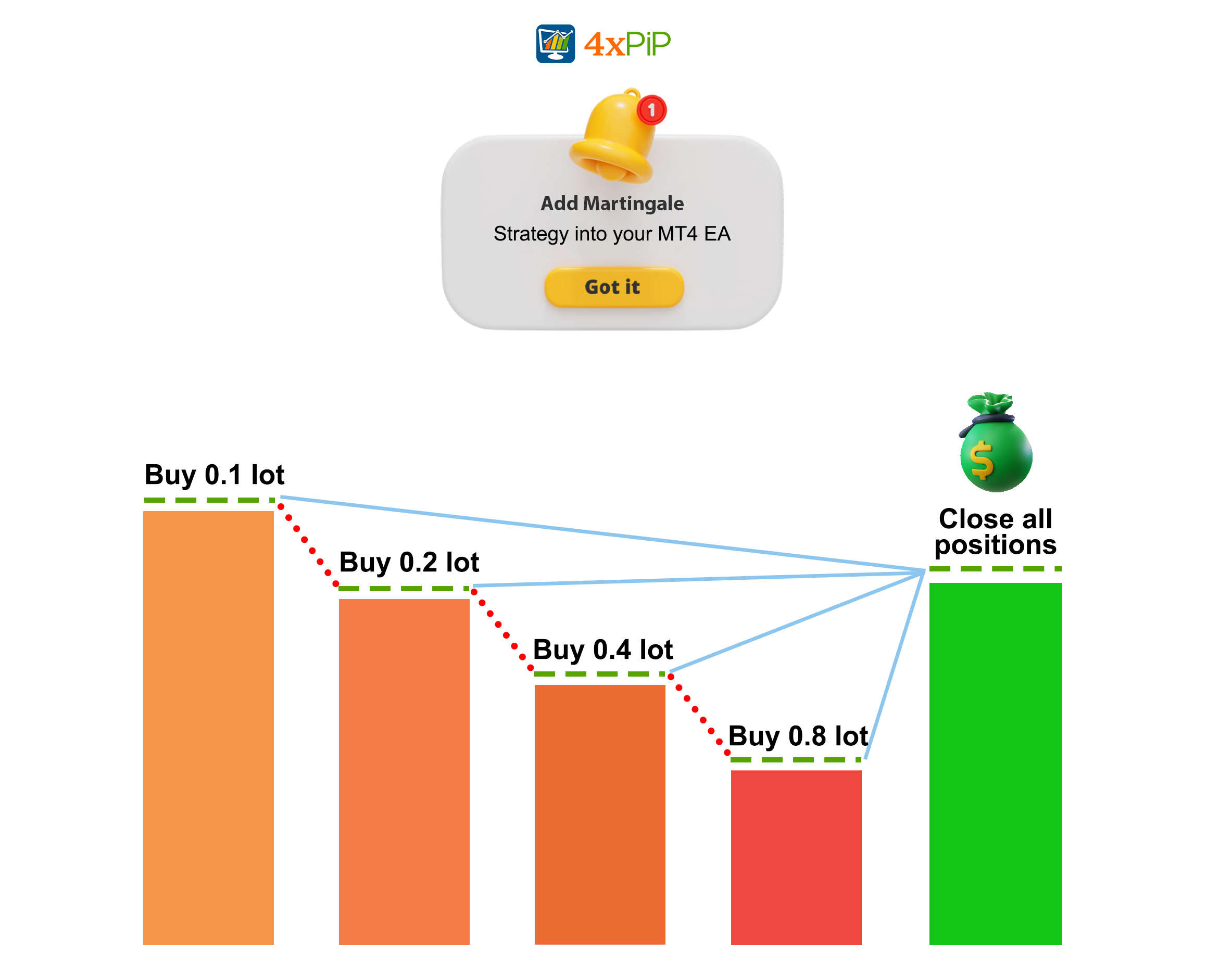
At its foundation, a Martingale EA is built on position scaling. When a trade moves into drawdown, the system increases the lot size on subsequent entries in the same direction. The intent is straightforward: a smaller retracement can recover previous losses and close the entire basket in profit.
For Fintech professionals, the appeal lies in predictability. The algorithm follows predefined rules, removing emotional decision-making. However, predictability does not mean low risk. The real complexity is not in opening trades, but in managing exposure during prolonged trends.
This is why modern implementations focus heavily on parameters like maximum drawdown limits, step size between orders, and equity protection rules—elements that separate a usable Martingale EA from a reckless one.
Why Martingale Strategies Still Attract Algorithmic Traders
Despite criticism, Martingale-based systems remain widely used. The reason is simple: when market conditions align, they can generate consistent returns with a high win rate.
From a system design perspective, Martingale EAs are attractive because they:
-
Perform well in ranging or mean-reverting markets
-
Allow precise control over entry spacing and lot progression
-
Can be stress-tested extensively using historical data
For professionals managing multiple automated strategies, these systems can play a role as part of a diversified algorithmic portfolio—if risk is actively controlled.
Martingale vs. Grid Trading Bot: What’s the Real Difference?
The discussion around Martingale vs. grid trading bot often creates confusion, especially for teams evaluating automation tools at scale.
A grid trading bot places buy and sell orders at fixed price intervals, regardless of direction. A Martingale EA, on the other hand, adjusts position size based on previous trade outcomes. While many systems blend both concepts, the distinction matters.
Here’s the practical takeaway:
-
Grid systems emphasize price structure and spacing
-
Martingale systems emphasize recovery through position sizing
When combined intelligently, grid logic can control entry frequency, while Martingale logic manages recovery. Poorly combined, they amplify risk. Understanding this interaction is critical for Fintech teams responsible for long-term capital allocation.
Risk Management: The Make-or-Break Factor
The biggest misconception about Martingale EAs is that they “blow accounts.” In reality, accounts fail due to unmanaged exposure, not the strategy itself.
Professionals should evaluate:
-
Maximum number of recovery trades
-
Equity stop-out thresholds
-
Adaptive lot sizing instead of rigid doubling
-
Symbol-specific volatility filters
Without these controls, even the best logic fails under extreme market conditions. With them, a Martingale EA becomes a calculated tool rather than a gamble.
Choosing the Right Platform: MT4 vs. MT5 Considerations
Platform choice matters more than many realize. Execution speed, order handling, and strategy tester accuracy directly affect how a Martingale EA behaves.
For traders operating in multi-asset or high-frequency environments, MT5 often provides better depth-of-market data and faster optimization tools. If you’re exploring advanced implementations, reviewing a Martingale EA designed specifically for MT5 can highlight how platform architecture impacts performance and risk control.
From a Fintech standpoint, this is less about preference and more about infrastructure alignment.
When a Martingale EA Makes Sense—and When It Doesn’t
A Martingale EA is not a universal solution. It performs best under specific conditions:
-
Stable spreads and low slippage
-
Instruments with historical mean-reversion behavior
-
Accounts sized appropriately for recovery logic
It is less suitable during:
-
High-impact news releases
-
Strong, one-directional trends
-
Undercapitalized accounts
For professionals, the key is context. Deploying the strategy blindly is risky; integrating it within a broader risk framework is strategic.
How Fintech Teams Can Evaluate a Martingale EA Properly
Before deployment, professionals should treat evaluation like any other system audit. That means:
-
Backtesting across multiple market cycles
-
Forward testing on demo or small live accounts
-
Monitoring drawdown curves, not just net profit
-
Stress-testing against extreme volatility scenarios
This disciplined approach turns the conversation from “Is Martingale dangerous?” to “Is this implementation suitable for our risk model?”
Final Thoughts: Strategy Over Sensation
A Martingale EA is neither a shortcut to easy profits nor an automatic account killer. It’s a tool—powerful, demanding, and unforgiving of poor configuration.
For Fintech professionals, success lies in understanding the mechanics, respecting the risks, and applying the strategy where it fits logically. When evaluated carefully and integrated responsibly, Martingale-based systems can serve a defined role in automated trading portfolios rather than being dismissed outright.
The difference is not in the algorithm—it’s in how thoughtfully it’s used.