The rise of on-demand apps has completely changed how people access daily services. Whether it is booking a taxi, ordering food, hiring a handyman, getting groceries delivered, or scheduling beauty services at home, users now prefer everything through their mobile phones. This growing shift towards digital convenience has created a massive market for multi-service platforms. Among the most popular and successful models is Gojek, a super app that offers dozens of services under one roof.
For entrepreneurs and startups, launching a Gojek clone app has become one of the most effective ways to enter this multi-service market. Instead of building separate apps for taxi booking, food delivery, home services, and courier services, you can create a single platform that offers all of these. This helps reduce cost, increase user engagement, and generate multiple revenue streams from one system.
In this guide, you will learn how to launch a successful multi-service business using a Gojek clone app. We will cover the step-by-step process, features, business strategies, technology, and long-term scaling. The goal is to help you understand exactly how to build, launch, and grow a profitable multi-service platform in your region.
Understanding the Multi-Service Super App Model
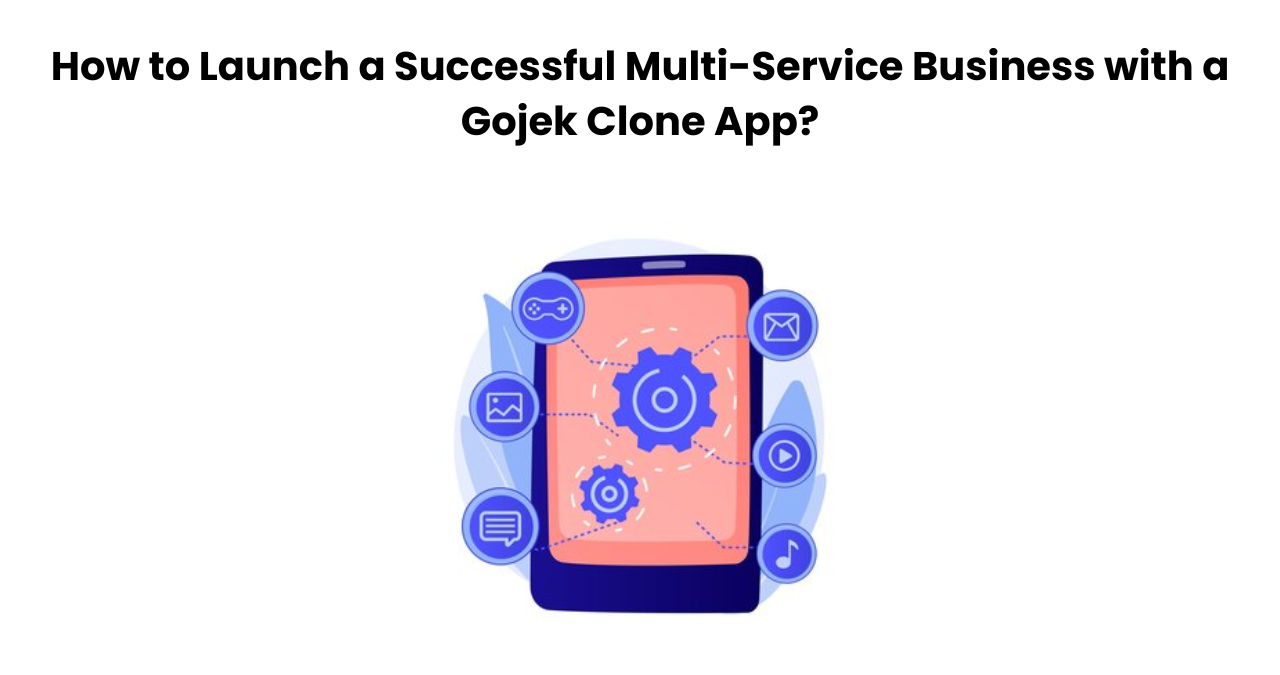
A multi-service app, also known as a super app, offers a wide range of services within a single platform. Instead of downloading multiple applications, users can access dozens of daily needs in one place. The Gojek clone app works on the same model, allowing businesses to offer services like transportation, delivery, shopping, repairs, home care, and professional assistance using a single interface.
This model is popular because it is convenient for users and cost-efficient for businesses. It reduces app maintenance effort, boosts cross-selling opportunities, and provides more ways to earn. As more people prefer all-in-one solutions, super apps are expected to grow even faster in the coming years.
Why Launching a Gojek Clone App Is a Strong Business Move
Launching a Gojek clone app is a powerful business opportunity because it gives you access to a high-demand market with limitless potential. People today expect quick services, transparent pricing, and easy payments. With a multi-service app, you can meet all these expectations while offering users more choices.
A Gojek clone also reduces development time since it is built on a proven and successful framework. Instead of creating everything from scratch, you get a ready-made structure that can be customized to fit your business. The model supports scalability, meaning you can start with a few services and expand gradually as your business grows.
Another major benefit is the revenue diversity. Unlike single-service apps, which rely on one income stream, a multi-service platform earns from various services. This reduces business risks and increases financial stability.
Step-by-Step Guide to Launching a Successful Multi-Service Business
Conducting In-Depth Market Research
The foundation of a successful multi-service business lies in understanding your market. Each region has different demands. Some areas may need more taxi services, whereas others may have higher demand for grocery delivery, home cleaning, or handyman services. Market research helps you pick the right services to start with.
Begin by studying your competitors. Look at what they offer, what works well, and where they fall short. Then, analyze user behavior. What are people searching for online? How do they book services currently? Can your app offer something faster or more convenient?
Market research helps you build a product that fits your location perfectly. It reduces business risks and gives you a clear direction for your service offerings.
Choosing the Right Services for Launch
A Gojek clone app can support more than 100 services, but that does not mean you need to launch all at once. Instead, select services based on demand and feasibility. Start with 5 to 10 services that people use most frequently. These may include taxi booking, food delivery, grocery delivery, parcel delivery, beauty services, plumbing, electrician services, and car rentals.
Offering too many services at launch can create operational challenges. Users prefer quality over quantity, so focus on building a reliable foundation before expanding. As your business stabilizes, you can add more services and gradually turn your app into a complete super app.
Creating a Strong Business Plan
A clear business plan helps you stay organized and focused. Define your business goals, target regions, marketing approach, revenue model, and long-term growth strategy. Set realistic objectives for the first six months and track your results regularly.
Your business plan should also define how you will onboard service providers, manage customer support, handle payments, and maintain service quality. Strong planning allows you to run your business more smoothly and make better decisions as you grow.
Designing a User-Friendly App Interface
User experience plays a crucial role in the success of your Gojek clone app. Since the app offers multiple services, the design must be clean, simple, and easy to navigate. Users should be able to find services quickly without confusion.
A cluttered interface can frustrate users and cause them to uninstall the app. Therefore, focus on clear categories, smooth transitions, minimal steps for booking, and a visually pleasing layout. A well-designed user interface builds user confidence and increases retention.
The service providers’ interface should also be simple and professional. Drivers, delivery partners, and home service providers should be able to accept orders, manage schedules, view earnings, and navigate easily.
Selecting the Right Technology Stack
The technology behind your Gojek clone app needs to be powerful enough to handle multiple services, real-time updates, and thousands of concurrent users. To achieve this, choose a strong and scalable technology stack. For mobile apps, you may choose native development or cross-platform frameworks. For backend development, choose a server language that supports speed, stability, and scalability.
Cloud platforms like AWS or Google Cloud offer automatic scalability, efficient load balancing, and strong security. These features are essential because multi-service apps handle many operations happen simultaneously. A reliable tech stack ensures your app remains fast and stable.
Integrating Smart Features for Convenience
A Gojek clone app succeeds when it offers features that improve convenience and reliability. Essential features include user registration, service browsing, booking, real-time tracking, secure payment systems, ratings, and order management.
To enhance the experience further, add advanced features like voice search, smart filters, in-app chat, route optimization, document uploads for professionals, instant payouts, and subscription plans. These features help your app stand out and give users more reasons to choose your platform over others.
Building Strong Vendor and Provider Partnerships
Your multi-service platform depends on service providers such as drivers, delivery partners, cleaners, mechanics, and beauticians. Without them, the app cannot function. So it is important to build strong relationships with providers by offering fair commissions, training support, flexible timings, and transparent payouts.
Happy service providers offer better service to customers, which helps your platform grow naturally. Build a smooth onboarding process where providers can register easily, upload documents, and begin receiving orders.
Implementing Secure and Fast Payment Systems
A multi-service app must support various payment methods such as wallets, cards, cash, and digital payments. Smooth payments build trust, reduce friction, and improve overall user satisfaction. A secure payment gateway also protects user data and prevents fraud.
Your app should automatically calculate commissions, payouts, taxes, and promotional discounts. With strong financial management features, your business becomes easier to run.
Testing the App Before Launch
Testing is one of the most important steps before going live. A multi-service app has many flows, so every feature must work perfectly. Testing includes checking the app on different devices, network conditions, and user scenarios. It also includes testing admin workflows, provider features, and payment processes.
Thorough testing ensures there are no glitches, slow screens, or technical errors at launch. A smooth launch enhances your brand reputation and helps attract early users.
Launching the App and Acquiring Customers
Once testing is complete, you can launch your Gojek clone app. Promote your launch through social media, local advertising, influencers, and referral programs. Offering welcome discounts or free delivery can help attract first-time users.
Customer acquisition is a continuous process. Keep your promotions active, publish regular updates, and monitor user feedback. Taking quick action on complaints and suggestions helps build a loyal user base.
Scaling the Business to Multiple Cities
Scaling is what turns your multi-service business into a long-term success. Once you establish your operations in one area, expand to nearby regions. Make sure your app architecture supports expansion without slowing down. You can add more services, partner with more providers, and explore new revenue models.
Scaling also includes improving technology, increasing marketing efforts, and analyzing performance regularly. A scalable structure helps your business grow without major challenges.
Conclusion
Launching a successful multi-service business with a Gojek clone app requires strong planning, smart execution, and long-term commitment. By understanding your market, choosing the right services, using strong technology, and building reliable provider partnerships, you can create an app that delivers convenience and value. A multi-service model offers endless opportunities for growth and revenue, especially when guided by the right strategy. Partnering with a skilled clone app development company can help you build a stable, feature-rich, and scalable platform that supports your business goals and ensures long-term success.
FAQs
What is a Gojek clone app?
A Gojek clone app is a multi-service platform that offers various on-demand services like taxi booking, food delivery, home services, and courier delivery within a single mobile application.
How many services can I offer in a Gojek clone app?
You can offer as many services as you prefer. Most platforms start with a few essential services and expand to 50 or even 100+ based on market demand.
Do I need separate apps for customers and service providers?
Yes, because customers and providers use the app differently. Separate apps ensure a smoother and more organized workflow for each user group.
How can I make my multi-service app successful?
Focus on service quality, strong provider onboarding, smooth app performance, and continuous user engagement to build trust and retention.
Can I expand my Gojek clone app to other cities?
Yes, the multi-service app model is highly scalable. Once you establish your presence in one city, you can expand to new regions with the same platform.