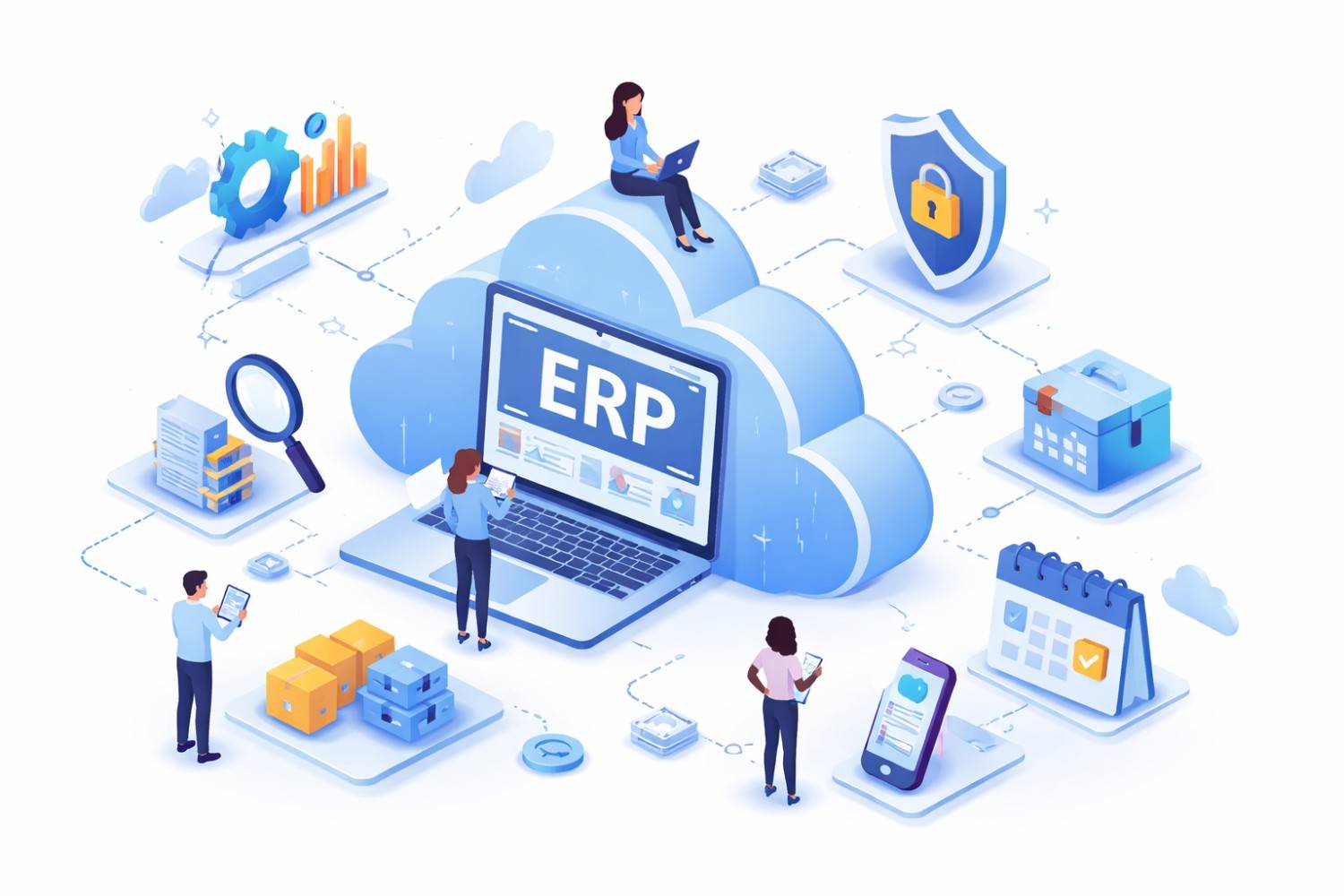
Cloud-based ERP systems have been around long enough that they no longer need an introduction yet somehow, they still do. We often speak with teams who know they need modernization but are unsure where to begin or what to avoid. Cloud ERP sits right at that crossroads. It promises agility, scalability, and fewer late-night server emergencies—and mostly delivers. Still, the journey is rarely a straight line. Over the years, we’ve seen businesses thrive after the move, and others stumble by skipping the basics. So, instead of chasing buzzwords, this article takes a grounded look at what cloud-based ERP really offers, where it challenges expectations, and how best practices make all the difference.
Understanding Cloud-Based ERP Systems
At its core, a cloud-based ERP system centralizes business operations—finance, inventory, HR, operations—on infrastructure hosted remotely rather than on local servers. That distinction matters more than it sounds. Cloud ERP allows access from anywhere, scales with demand, and shifts maintenance away from internal teams. We’ve noticed that organizations often underestimate this operational shift. It’s not just a technical upgrade; it’s a change in how teams work daily. Compared to traditional on-premise solutions, cloud ERP systems feel lighter, faster, and more adaptable. And while the technology is sophisticated, the goal remains simple: streamline processes without adding complexity where none is needed.
Why Businesses Are Moving Toward Cloud ERP
The move toward cloud ERP is rarely driven by a single reason. Usually, it’s a mix of growth pressure, outdated systems, and the realization that spreadsheets should not be mission-critical tools (yet they often are). Businesses want flexibility without constant infrastructure costs. They want faster rollouts, better visibility, and systems that don’t require heroic IT efforts to maintain. We’ve seen leadership teams reach a tipping point—often during expansion or restructuring—when legacy systems simply can’t keep up. Cloud ERP becomes less of an option and more of a necessity. Not because it’s trendy, but because modern operations demand systems that move at business speed.
Key Benefits of Cloud-Based ERP Solutions
Cloud-based ERP systems bring a set of benefits that extend beyond cost savings. Yes, predictable pricing helps. But the real value shows up in speed, access, and resilience. Updates happen automatically. Data becomes available in real time. Teams collaborate without being tied to a single location. We’ve observed that organizations feel the impact quickly—sometimes within weeks of deployment. IT teams spend less time maintaining systems and more time improving them. Business leaders gain clearer insights without waiting for reports to be manually compiled. In short, cloud ERP reduces friction. And when friction disappears, productivity has a habit of quietly improving across the board.
How Cloud ERP Improves Business Agility
Agility is one of those words that gets overused—until you experience it. Cloud ERP enables businesses to adapt faster because systems are no longer rigid. Adding users, expanding modules, or integrating new tools becomes far more manageable. We’ve worked with companies that needed to pivot operations quickly, whether due to market shifts or internal changes. Cloud ERP supported that flexibility without requiring full system overhauls. Remote access also plays a major role. Teams can collaborate across locations without delay, which has become less of a luxury and more of an expectation. Agility, in this context, isn’t theoretical—it’s operational and measurable.
Common Challenges in Cloud-Based ERP Implementation
Despite its advantages, cloud ERP implementation comes with challenges that shouldn’t be underestimated. Data migration is often the first hurdle—legacy data rarely arrives clean or consistent. Change resistance follows closely behind. People grow attached to familiar systems, even inefficient ones. We’ve also seen concerns around customization limits and performance expectations during peak usage. These challenges are normal, not signs of failure. The problem arises when they’re ignored. Successful projects acknowledge these risks early and plan accordingly. Cloud ERP is forgiving, but not careless-proof. Addressing challenges upfront saves time, budget, and a fair amount of frustration later on.
Security and Compliance Considerations
Security is often the first question raised—and rightly so. Cloud ERP providers invest heavily in security frameworks, often exceeding what individual organizations can maintain internally. That said, security is a shared responsibility. We’ve noticed confusion around this point. While vendors secure infrastructure, businesses must manage access, permissions, and compliance policies. Regulatory requirements vary by region and industry, making early planning essential. Cloud ERP systems typically support compliance standards, but configuration matters. When security is treated as a design principle rather than an afterthought, cloud ERP becomes not only secure—but resilient. And resilience, in today’s environment, is non-negotiable.
Managing Customization Without Breaking the System
Customization is tempting—and dangerous when overdone. Cloud ERP platforms favor configuration over heavy customization for a reason. We’ve seen projects slow down when teams attempt to replicate every legacy process instead of improving them. The smarter approach is aligning workflows with system capabilities. That doesn’t mean sacrificing uniqueness; it means prioritizing maintainability. Excessive customization increases upgrade complexity and long-term costs. The best results come when businesses adapt processes slightly rather than forcing systems to bend entirely. Cloud ERP works best when it’s allowed to do what it’s designed for—support growth without becoming fragile over time.
Best Practices for Successful Cloud ERP Development
Successful cloud ERP initiatives start long before development begins. Clear objectives, stakeholder alignment, and realistic timelines form the foundation. We’ve learned that projects succeed when business goals drive technical decisions—not the other way around. Choosing experienced partners matters, but internal ownership matters more. Communication should remain consistent throughout the lifecycle. Phased rollouts often outperform big-bang launches. Testing deserves more time than initially planned (it always does). These best practices are not revolutionary, but they are proven. When followed with discipline, cloud ERP projects tend to deliver exactly what they promise—without unnecessary drama.
Planning and Requirement Gathering That Actually Works
Requirement gathering sounds straightforward, yet it’s where many projects quietly unravel. Vague expectations lead to mismatched outcomes. We encourage teams to focus on what truly matters—core workflows, reporting needs, and integration points. End-user involvement is essential. They understand daily pain points better than anyone. We’ve noticed that workshops outperform long documents every time. Clear priorities prevent scope creep, and documented decisions prevent confusion later. Planning isn’t about predicting everything; it’s about creating clarity where it counts. When requirements are grounded in reality, the entire project moves with far more confidence and far fewer surprises.
Selecting the Right Cloud Architecture
Choosing the right cloud architecture sets the tone for performance and scalability. Public, private, or hybrid—each has advantages depending on business needs. We’ve seen organizations default to one model without evaluating workload patterns or compliance requirements. That’s a missed opportunity. Architecture should support growth without inflating costs. It should also align with integration strategies and security policies. Flexibility is key. The right architecture isn’t the most complex one—it’s the one that quietly supports operations without drawing attention to itself. When architecture decisions are made thoughtfully, future expansion becomes far easier to manage.
Integration With Existing Business Systems
No ERP system operates in isolation. Integration with CRM, analytics, and operational tools determines how useful the system becomes. We’ve observed that integration issues rarely stem from technology—they stem from unclear data ownership. Cloud ERP platforms typically offer strong integration capabilities, but strategy matters. Defining data flow early prevents duplication and inconsistency. Legacy systems often linger longer than expected, making compatibility essential. When integration is treated as part of the core design, not an add-on, cloud ERP becomes a true central hub rather than just another system to manage.
Testing, Deployment, and Change Management
Testing deserves patience. Rushed testing leads to delayed adoption—and frustrated users. We’ve learned that involving real users during testing uncovers issues documentation never will. Deployment works best in phases, allowing teams to adapt gradually. Change management plays an equally important role. Training should be practical, not theoretical. Clear communication reduces resistance. People don’t resist systems—they resist uncertainty. When users understand how the new ERP Software improves their work, adoption follows naturally. Successful deployment isn’t about flipping a switch; it’s about guiding people through change with clarity and consistency.
Post-Implementation Optimization and Scaling
Go-live is not the finish line—it’s the starting point. After implementation, systems need monitoring, refinement, and occasional adjustment. We’ve seen organizations unlock additional value months later by optimizing reports or automating workflows they initially postponed. Cloud ERP platforms make scaling easier, but growth still requires planning. Usage patterns change. New departments come onboard. Continuous improvement ensures the system evolves with the business. When post-implementation optimization is treated as an ongoing practice, cloud ERP remains relevant, efficient, and aligned with long-term goals.
Future Trends in Cloud-Based ERP Development
Cloud ERP continues to evolve. Automation, AI-driven insights, and predictive analytics are becoming standard features rather than optional extras. We’re also seeing more industry-specific ERP solutions emerge, reducing the need for heavy customization. User experience is improving, making systems more accessible to non-technical users. The future points toward smarter systems that support decision-making, not just data storage. While technology will keep advancing, the fundamentals remain the same—clarity, alignment, and thoughtful execution will always determine success more than features alone.
Conclusion
Cloud-based ERP systems are not quick fixes—but they are powerful tools when implemented thoughtfully. We’ve seen firsthand how the right approach transforms operations, improves visibility, and reduces long-term complexity. Success lies less in technology and more in preparation, communication, and ongoing optimization. When businesses treat cloud ERP as a strategic investment rather than a technical task, results tend to follow. And while every journey looks different, one thing remains consistent—clarity at the start leads to confidence at scale.
FAQs
What makes cloud-based ERP different from traditional ERP systems?
Cloud ERP is hosted remotely, offering scalability, remote access, and automatic updates without on-premise infrastructure.
Is cloud ERP suitable for growing businesses?
Yes. Cloud-Based ERP scales easily and supports expansion without major infrastructure changes.
How long does implementation usually take?
Timelines vary, but most projects range from several months depending on complexity and scope.
Can cloud ERP systems be customized?
They support configuration and limited customization, prioritizing maintainability over heavy modification.
How secure are cloud-based ERP platforms?
They use advanced security frameworks, though access management remains a shared responsibility.
What should businesses focus on before starting ERP Software Development?
Clear goals, stakeholder alignment, and realistic planning make the biggest difference.