
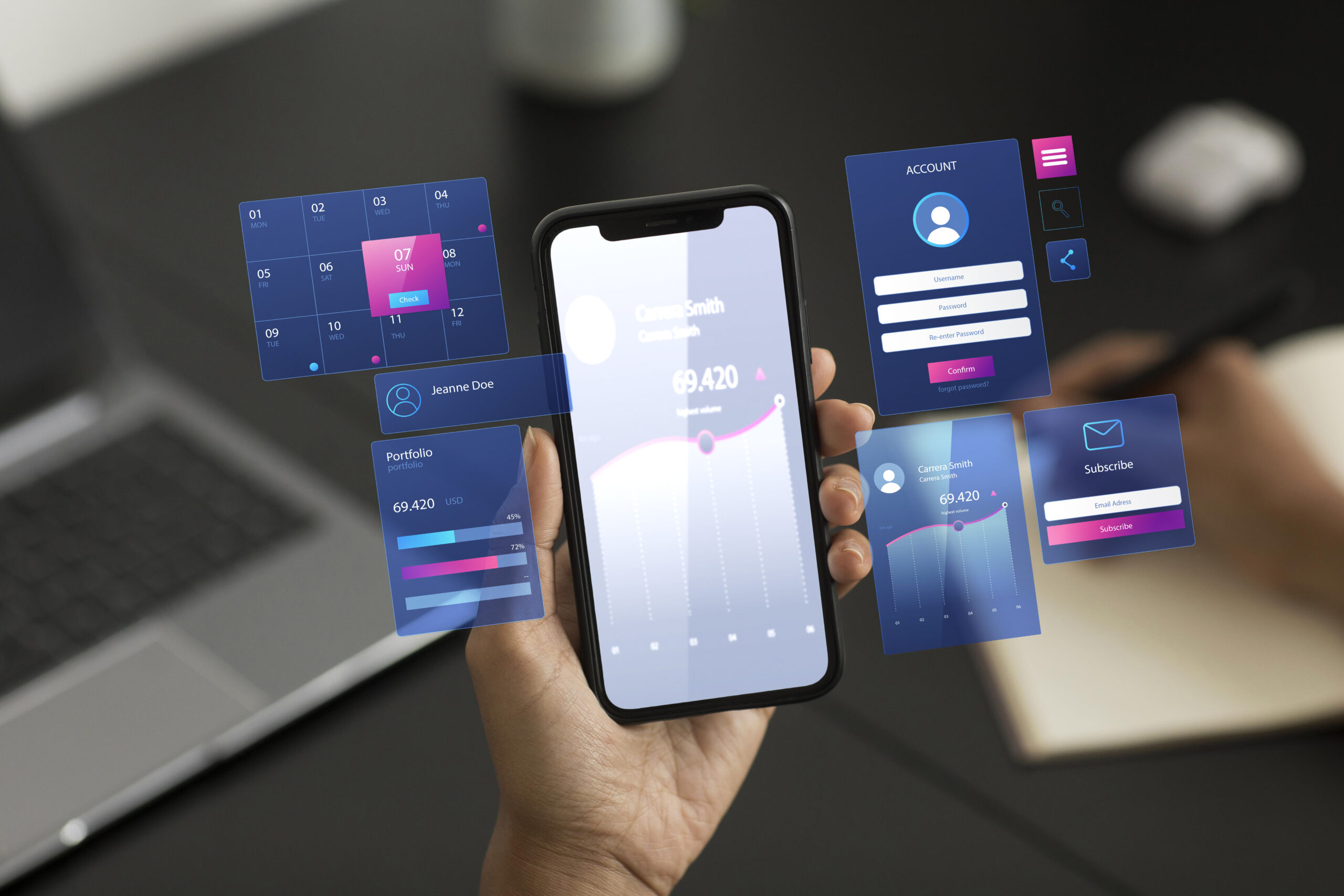
Mobile app development is entering a decisive phase. By 2026, compliance mandates, edge computing adoption, and AI-native user expectations will fundamentally reshape how digital products are designed and delivered. Business owners who treat AI as an add-on rather than a foundational layer risk launching apps that feel outdated before they scale.
This article breaks down how mobile app development must evolve toward AI-first architectures, what that means in practice, why it matters for compliance and performance, and how forward-looking companies can prepare today without overengineering tomorrow.
Why Mobile App Development Is Becoming AI-First
Traditional mobile architectures were built around static workflows, predictable user paths, and centralized cloud logic. That model no longer holds.
Modern mobile app development must account for:
- Real-time personalization at scale
- Intelligent automation inside user flows
- On-device inference for latency-sensitive features
- Regulatory requirements around AI decision-making
AI-first does not mean “AI everywhere.” It means designing the app so intelligence is native to its architecture, planned, governed, and optimized from day one.
This shift is already visible in fintech, healthcare, logistics, and SaaS platforms where apps are expected to learn, adapt, and optimize continuously.
Mobile App Development and the Rise of Edge Computing
Edge computing is no longer experimental. By 2026, a significant portion of AI inference will happen directly on devices rather than centralized servers.
Why this matters for mobile app development:
- Lower latency: AI features respond instantly
- Improved privacy: Sensitive data stays on-device
- Offline intelligence: Apps remain functional without connectivity
- Cost control: Reduced cloud inference expenses
Designing for edge requires intentional architectural choices early in mobile app development. Models must be lightweight, updatable, and secure—without compromising accuracy or user experience.
Compliance-Driven Architecture in AI-Powered Apps
AI regulation is tightening globally. From explainability to data residency, compliance will shape mobile app development more than any UI trend.
AI-first architecture supports compliance by:
- Separating inference logic from business logic
- Logging AI decisions transparently
- Supporting opt-in/opt-out AI experiences
- Enabling region-specific AI behavior
Into the planning phase, many companies realize that compliance requirements alone justify working with a mobile application development company experienced in AI-governed architectures rather than retrofitting controls later.
Mobile App Development Focused on Modular Intelligence
One mistake businesses make is tightly coupling AI models to core app logic. This creates fragility.
A smarter mobile app development approach is modular intelligence, where:
- AI services are interchangeable
- Models can evolve independently
- Features degrade gracefully when AI is unavailable
This ensures your app remains stable even as AI capabilities expand. It also allows teams to experiment without risking production reliability.
UX Changes in AI-First Mobile App Development
AI changes how users interact with apps. Interfaces must communicate intelligence without overwhelming users or creating trust gaps.
Best practices include:
- Showing why an AI action occurred
- Allowing user overrides
- Gradual learning instead of abrupt automation
- Clear feedback loops
AI should feel like a helpful assistant, not an invisible decision-maker.
Security Considerations in AI-Driven Mobile App Development
Security expands beyond APIs and databases when AI enters the picture.
AI-first mobile app development must address:
- Model poisoning risks
- Inference abuse
- Data leakage during training updates
- Secure model distribution
These challenges require collaboration between app engineers, AI specialists, and security teams—not siloed development.
Scaling AI Without Breaking Mobile Performance
Performance remains a top KPI. AI must enhance—not degrade—the experience.
Optimized mobile app development balances:
- On-device vs cloud inference
- Model compression techniques
- Adaptive inference based on device capability
- Background processing strategies
In real-world projects, businesses often seek regional expertise, such as a mobile app development company in Austin organizations trust for scalable, performance-driven builds that balance innovation with stability.
Preparing Your Mobile App for 2026 and Beyond
AI-first architecture is not about predicting the future perfectly. It’s about designing for adaptability.
To future-proof your mobile app development strategy:
- Treat AI as a core system component
- Design for compliance from the start
- Build modular, replaceable intelligence layers
- Optimize for edge computing realities
- Keep user trust central to AI UX decisions
Key Takeaway for Business Leaders
The question is no longer if AI will shape your mobile app, but how well your architecture supports it.
AI-first mobile app development enables faster innovation, better compliance readiness, and scalable intelligence without technical debt. Companies that adopt this mindset today will be positioned to launch, iterate, and compete confidently through 2026 and beyond.