
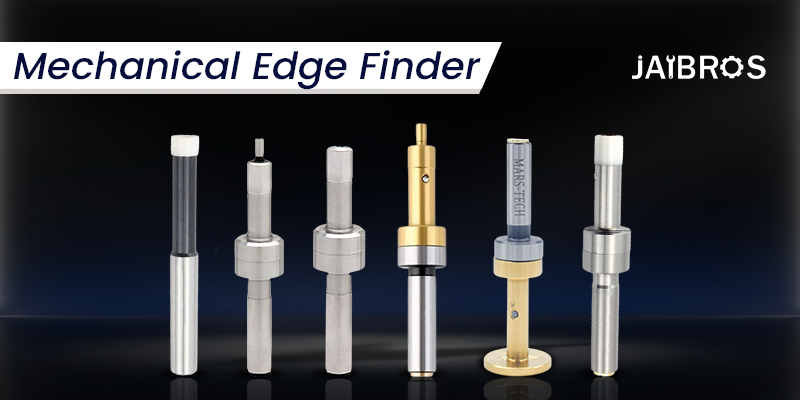
Improving CNC Precision and Setup Speed with an Edge Finder
In CNC machining, setup time and dimensional accuracy directly affect productivity, cost, and overall job quality. Even a small alignment error can result in scrap, rework, or tool damage. To overcome these challenges, machinists rely on precise referencing methods to establish correct workpiece zero points. One of the most reliable solutions forthis purpose is accurate edge finder detection, which ensures consistent results across machining operations.
Understanding CNC Setup and Why Accuracy Matters
CNC setup involves positioning the workpiece, aligning fixtures, and defining reference points before machining begins. Among these steps, locating the exact edge of a workpiece is critical because it determines the coordinate system used by the machine.
If the reference point is incorrect:
- Tool paths may shift
- Dimensions can go out of tolerance
- Surface finish may suffer
Production time increases due to corrections
This is where an edge finder becomes valuable. It allows machinists to precisely locate workpiece boundaries, ensuring the CNC program starts from the correct zero position every time.
How Edge Location Tools Reduce CNC Setup Time
Traditional edge-finding methods such as paper feelers or trial cuts are time-consuming and inconsistent. Modern edge-finding solutions significantly streamline this process.
Faster Zero Setting
Using a dedicated edge finder tool, machinists can quickly locate edges without repeated test cuts. This reduces manual adjustments and speeds up machine preparation, especially in high-volume production.
Consistent Results Across Jobs
Once operators become familiar with the process, locating edges becomes a repeatable task. The reduced variation minimizes setup delays between different workpieces and fixtures.
Less Machine downtime
Faster setups mean machines spend more time cutting and less time waiting. Over time, this efficiency translates into improved shop productivity and lower operating costs.
Improving Machining Accuracy Through Precise Edge Detection
Accuracy is not just about speed; it’s about confidence in measurements. Correct edge detection ensures that tool paths align perfectly with design specifications.
A well-used edge finder helps eliminate guesswork, allowing machinists to rely on mechanical or electronic feedback rather than visual estimation.
Tighter Tolerances
Precise edge location improves dimensional control, which is especially important for tight-tolerance components used in aerospace, automotive, and medical applications.
Reduced Scrap and Rework
Accurate referencing lowers the risk of misaligned cuts. This reduces material waste and saves both time and money.
Better Tool Life
Correct setup reduces unexpected tool engagement and vibration, extending cutting tool life and improving surface finish.
Mechanical vs Electronic Edge Detection Methods
Choosing the right tool depends on machining requirements, operator skill level, and accuracy expectations.
Mechanical Edge Finder
A mechanical edge uses physical contact and visual indication to signal when the tool reaches the edge. It is:
Reliable for standard milling operations
This option is ideal for workshops that need dependable performance without advanced electronics.
Electronic Edge Finder
An electronic edge finder uses electrical contact or sensors to detect edges with higher sensitivity. Advantages include:
Higher accuracy for complex jobs
Electronic models are especially useful in CNC environments where precision and speed are critical.
Both types support efficient setups, but electronic versions often provide better repeatability in high-precision applications.
Best Practices for Using Edge Detection Tools in CNC Machining
To maximise benefits, machinists should follow proper techniques:
- Ensure the spindle is clean before use
- Maintain an appropriate spindle speed
- Approach the workpiece slowly for accurate detection
- Regularly inspect tools for wear or damage
Correct handling ensures the edge finder delivers consistent and accurate results over time.
Role in Modern CNC Manufacturing
Despite advancements in probing systems and automation, edge detection tools remain widely used. They offer a balance between simplicity, affordability, and accuracy.
In many workshops, machinists still prefer a reliable edge finder for quick setups, prototype jobs, and short production runs. These tools also serve as excellent backups when advanced probing systems are unavailable.
Cost Efficiency and Long-Term Value
From small job shops to large manufacturing units, reducing setup time directly impacts profitability. By improving accuracy and reducing errors, a quality edge finder pays for itself through:
- Lower scrap rates
- Faster job turnaround
- Improved machine utilization
- This makes it a smart investment for CNC operators at all levels.
Conclusion
In CNC machining, speed and accuracy must work together. Reliable edge detection simplifies setup, enhances precision, and supports consistent production quality. A properly selected edge finder remains an essential tool for machinists aiming to improve efficiency without compromising accuracy.
About Jaibros:
Jaibros is a trusted supplier of high-quality CNC cutting and measuring solutions, offering reliable tools designed to meet modern machining demands. With a focus on precision, durability, and performance, Jaibros supports manufacturers in achieving consistent and accurate results.
FAQs
- What is the primary purpose of an edge finder tool in CNC machining?
It helps locate the exact edge of a workpiece to set accurate reference points before machining.
- Is an electronic edge finder more accurate than a mechanical one?
Electronic versions generally offer higher sensitivity and faster detection, making them suitable for precision applications.
3. Can beginners use mechanical edge detection tools easily?
Yes, mechanical tools are simple to operate and ideal for learning basic CNC setup techniques.
4. Do edge detection tools work on all materials?
They work on most conductive and non-conductive materials, depending on the tool type and method used.
5. How often should edge detection tools be checked or calibrated?
Regular inspection is recommended, especially in high-precision environments, to maintain accuracy and reliability.
