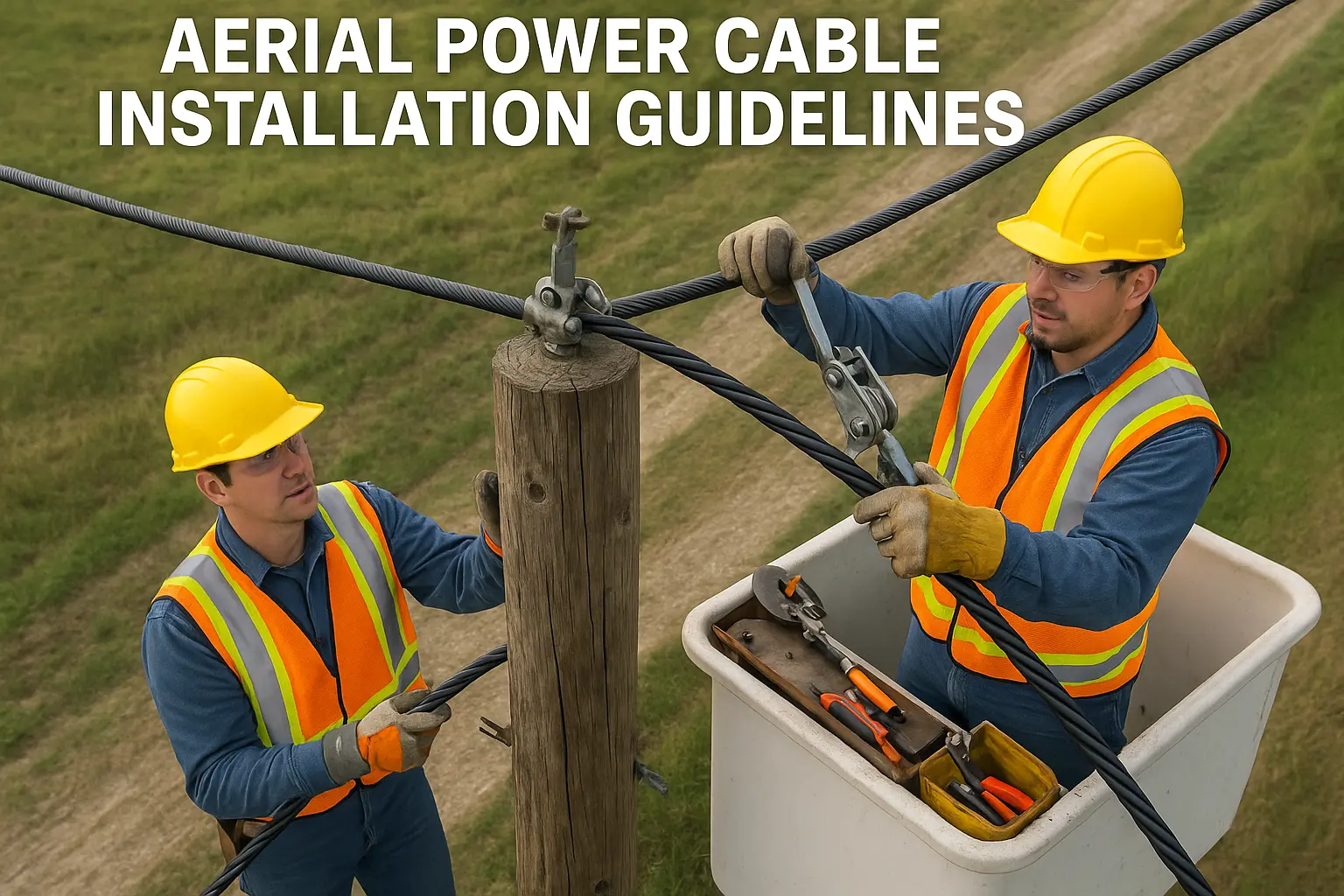
In modern power distribution networks, the reliability, durability, and efficiency of overhead conductors are crucial. Among the essential components of these networks is the aerial power cable, a versatile solution designed to ensure seamless electricity transmission across urban, suburban, and rural areas. At HNBF Power, we specialize in manufacturing high-quality aerial power cables that meet international standards and are tailored to the specific needs of utilities, EPC contractors, and industrial clients.
What is an Aerial Power Cable?
An aerial power cable is a type of overhead conductor designed to transmit electrical energy through air, usually supported by poles or towers. Unlike underground cables, aerial power cables are exposed, which makes their design and material selection critical for long-term performance and safety. They are widely used in power transmission and distribution systems where cost-effectiveness, installation speed, and maintenance accessibility are priorities.
Key Components of Aerial Power Cables
-
Conductor Core: Typically made from aluminum (AAC, AAAC) or a combination of aluminum and steel (ACSR), providing strength, conductivity, and flexibility.
-
Insulation: For insulated variants like ABC (Aerial Bundled Cable), cross-linked polyethylene (XLPE) or other weather-resistant materials are used to prevent short circuits and improve safety.
-
Supporting Accessories: Hardware such as clamps, spacers, and terminations ensures the structural integrity and proper installation of aerial cables across spans.
Types of Aerial Power Cables
HNBF Power offers a range of aerial power cables to meet diverse transmission and distribution requirements:
1. AAC (All Aluminum Conductor)
Ideal for short-to-medium spans, AAC cables provide excellent conductivity with lightweight aluminum. They are corrosion-resistant and cost-effective, making them suitable for urban and rural networks.
2. AAAC (All Aluminum Alloy Conductor)
AAAC cables are stronger than AAC due to the alloy composition, offering improved mechanical strength for longer spans and high-tension applications.
3. ACSR (Aluminum Conductor Steel Reinforced)
ACSR combines aluminum and steel, providing high tensile strength for long-distance transmission and high-voltage lines. It is widely preferred for industrial-scale power networks.
4. ABC (Aerial Bundled Cable)
ABC cables are insulated and bundled, reducing the risk of short circuits and increasing safety in densely populated areas. They are especially suitable for low- and medium-voltage networks.
Advantages of Using HNBF Power Aerial Cables
Choosing the right aerial power cable is critical for operational efficiency. HNBF Power cables provide the following advantages:
-
High Reliability: Manufactured under strict quality controls to withstand environmental challenges, including extreme temperatures, wind, and corrosion.
-
Durability: Designed to deliver long-term service with minimal maintenance.
-
Cost Efficiency: Lightweight and easy to install, reducing labor and installation costs.
-
Safety: ABC and insulated variants minimize the risk of electrical accidents in populated areas.
-
Custom Solutions: HNBF Power can tailor conductor sizes, insulation types, and configurations to meet project-specific requirements.
Applications of Aerial Power Cables
Aerial power cables manufactured by HNBF Power are utilized across various sectors, including:
-
Urban and rural electricity distribution
-
Industrial and commercial power networks
-
Renewable energy transmission projects
-
Temporary and emergency power supply lines
These applications demand consistent performance and adherence to international standards, which HNBF Power ensures through rigorous testing and quality assurance.
Installation and Maintenance Tips
Proper installation and maintenance are essential to maximize the performance and lifespan of aerial power cables:
-
Span Planning: Correct spacing between poles or towers prevents excessive sag and mechanical stress.
-
Weather Considerations: Ensure cables are resistant to UV exposure, wind load, and corrosion.
-
Regular Inspection: Periodic checks for wear, corrosion, or insulation damage can prevent outages.
-
Professional Handling: Use certified engineers and experienced contractors to install and maintain aerial cables.
FAQs About Aerial Power Cables
Q1: What is the difference between AAC, AAAC, and ACSR cables?
A1: AAC is lightweight and cost-effective, AAAC offers better tensile strength due to alloying, and ACSR combines aluminum and steel for long-span, high-tension applications.
Q2: Can aerial power cables be installed in densely populated areas?
A2: Yes, insulated variants like ABC cables are ideal for urban areas, reducing safety risks and short circuits.
Q3: How long do HNBF Power aerial cables last?
A3: With proper installation and maintenance, HNBF Power aerial cables can provide decades of reliable service.
Q4: Do you provide customized aerial cable solutions?
A4: Absolutely. HNBF Power offers tailor-made solutions to meet project-specific voltage, length, and environmental requirements.
Q5: Are these cables compliant with international standards?
A5: Yes, all HNBF Power aerial power cables adhere to IEC and other global quality standards.
Why Choose HNBF Power?
As a global manufacturer, HNBF Power is committed to delivering high-quality overhead conductors and power cables. Our technical expertise, extensive product range, and customer-focused solutions make us a trusted partner for utilities, EPC contractors, and industrial buyers worldwide.
Call to Action:
For reliable, durable, and customized aerial power cable solutions, contact HNBF Power today. Our experts will guide you through the best options for your project requirements and ensure timely delivery of top-quality overhead conductors.For more info visit our site HNBFPOWER.