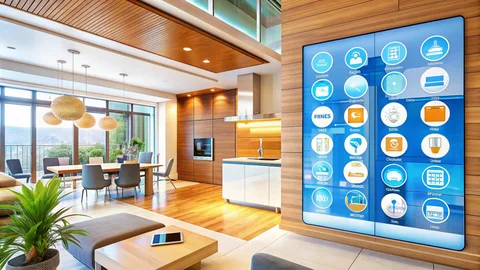
Choosing the right partner matters more than choosing any single device. A skilled Smart home automation Company turns a collection of gadgets into dependable behavior that improves daily life, reduces friction, and protects privacy. The companies that succeed treat each installation as infrastructure: they start with outcomes, design a resilient network backbone, choose interoperable devices with a path forward, commission the system under realistic conditions, and hand the homeowner a simple operational model instead of a tangle of features. This article walks you through how to evaluate a Smart home automation Company, what practical processes separate durable installations from short-lived demos, and the questions you should ask before signing a contract so you end up with a system people actually use.
Start with outcomes, not product lists
A trustworthy Smart home automation Company begins with a conversation about what the family or occupants want to improve, not with a product catalog. The installer should ask about real routines: when people wake up, how they leave the house, which rooms are occupied during the day, concerns about safety, and the level of desired automation. Outcomes are concrete and measurable — reduce hallway trips at night by automated low-level lighting, enable remote temporary access for caregivers, or lower HVAC runtime in unused rooms by zoned controls. Defining these outcomes up front prevents scope creep and ensures that the project budget targets benefits that matter rather than shiny features that are seldom used.
Network and infrastructure are non-negotiable
The single most common reason automations feel flaky is an underdesigned network. A competent Smart home automation Company treats the network as infrastructure, not as an afterthought. That means running Ethernet to core locations, using Power over Ethernet (PoE) for cameras and access points where appropriate, and installing a small labeled network closet with a managed switch and UPS to keep controllers running through brief outages. The company should also segment IoT devices on a separate VLAN or SSID to reduce exposure and minimize noise for primary devices like phones and laptops. A properly designed backbone makes the entire system far more reliable and easier to service.
Protocol strategy and future-proofing
Today’s smart home world contains Wi-Fi, Zigbee, Z-Wave, Thread, Bluetooth, and cloud ecosystems. A good Smart home automation Company favors interoperability and local control where possible. Emerging standards like Matter are narrowing vendor lock-in, and companies that design with standards in mind reduce the risk of being trapped in a single ecosystem. Ask prospective companies how they plan for vendor obsolescence and firmware end-of-life. A thoughtful partner chooses devices with a clear update path and documents migration strategies so the homeowner can upgrade endpoints without ripping out the entire system later.
Hardwire where it counts, wireless where it helps
A pragmatic balance between wired and wireless devices is a hallmark of good design. Hardwire the backbone and mission-critical devices — controllers, access points, media servers, and primary cameras — while using wireless for convenience endpoints and battery-powered sensors. This hybrid approach reduces latency, improves reliability, and minimizes battery chores. A Smart home automation Company should explain why they wired certain locations during the survey and where wireless was chosen to reduce disruption and cost.
Design for people: simple scenes and clear fallbacks
Automation succeeds when it reduces cognitive load, not when it makes things more complicated. The company you choose should design a small set of predictable, named scenes (for example: Home, Away, Night, Movie) and map them to physical controls — wall keypads, simple scene switches, or a single main app view. Physical fallbacks are crucial: guests, older relatives, or service workers shouldn’t need an app or account to operate lights or door locks. The ideal Smart home automation Company creates tactile, labeled controls for common actions and documents how to operate the home in plain language so everybody in the house can use it.
Commissioning: the often-missed step that prevents callbacks
Commissioning turns a set of devices into a system. It is where the installer tests automations in real conditions, simulates network failures, checks battery behaviour in sensors, and tunes motion sensors to avoid nuisance triggers. Ask any prospective company whether commissioning is part of the quoted price and insist on it as a deliverable. Commissioning includes measuring wireless coverage, verifying schedules and triggers, and walking the household through normal and failure scenarios. A commissioned system is far less likely to end up on a return visit list.
Security and privacy baked into the deliverable
Security must be part of the initial design. The best Smart home automation Company segments devices, enforces unique account credentials, enables two-factor authentication, and minimizes cloud dependency for essential functions like door locks. They should also advise on camera storage policies and local versus cloud recording tradeoffs to protect privacy. Ask how the company manages firmware updates and if they offer an optional maintenance plan for security patching. A vendor that treats security as ongoing work, rather than a checklist item, is the one to trust with sensitive systems.
Documentation, handover, and training
A professional Smart home automation Company provides a clear handover: a simple manual with device names, how to operate the primary scenes, account recovery steps, and a short troubleshooting guide. They should label switches and write down primary usernames and privileged accounts in a secure manner. Training is brief but essential: a 30- to 60-minute walkthrough that covers everyday operation and emergency fallback saves countless support calls. If the company offers a follow-up check after a few weeks to fine-tune sensors or schedules, that’s a sign they prioritize long-term satisfaction.
Support models and lifecycle care
Technology ages and people’s needs change. A reliable Smart home automation Company provides clear support options: a lightweight maintenance plan, hourly support, or a subscription service for firmware and health monitoring. Understand the SLA for on-site support and how warranty coordination is handled. The right company will explain how it will assist when a device reaches end-of-life or when new standards like Matter require changes. Long-term care is as important as the initial installation.
Practical questions to ask potential companies
When evaluating companies, ask specific operational questions rather than marketing slogans. Ask how devices are named and documented, how network segmentation is implemented, what commissioning steps are included, how firmware updates are handled, what the response time is for support, and how they handle temporary guest access or account recovery. A company that answers with concrete processes rather than vague promises is more likely to deliver a reliable system.
Red flags and warning signs
Be wary of firms that push proprietary cloud-only solutions for mission-critical items like locks or that cannot describe their commissioning process. Avoid vendors who skip a network survey or who cannot show examples of labeled documentation and handover materials. Extremely low bids that omit wiring, commissioning, or documentation often cost far more in callbacks and frustration. Choose a partner that treats automation as infrastructure and offers a clear plan for the system’s lifetime.
Cost and value: how to evaluate proposals
Compare bids not only on price but on scope: which one includes proper network work, commissioning, documentation, and a reasonable support package? The lowest price is rarely the best value. Favor proposals that describe outcomes, list deliverables, and allow for phasing in future features. A staged implementation lets homeowners see value early and defers non-essential items until the backbone and UX prove themselves.
Conclusion
A great Smart home automation Company is a partner, not a parts vendor. The right partner begins with outcomes, builds a resilient backbone, favors interoperable and maintainable devices, commissions carefully, and hands over a system that real people can use and trust. When you choose a company with these practices, automation becomes durable infrastructure that improves safety, comfort, and energy performance while protecting user privacy and simplifying daily life.