
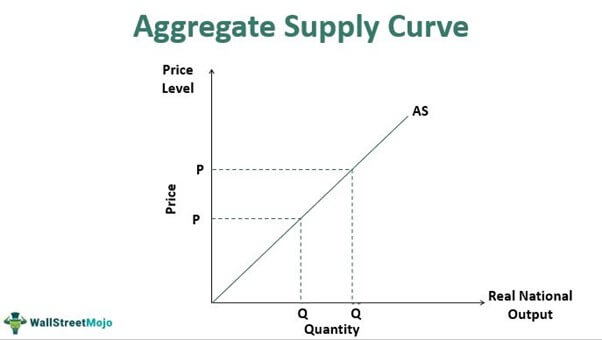
Economic uncertainty, triggered by factors such as financial crises, geopolitical tensions, pandemics, or sudden shifts in trade policies, can profoundly affect the functioning of an economy. One of the key elements influenced during such periods is aggregate supply (AS), which represents the total quantity of goods and services that producers in an economy are willing and able to supply at different price levels.
Understanding how aggregate supply responds during uncertain times is crucial for policymakers, businesses, and investors aiming to stabilize economic activity and ensure sustainable growth.
The Concept of Aggregate Supply
Short-Run Aggregate Supply (SRAS): In the short run, some input costs, such as wages or raw material prices, may be sticky or slow to adjust. SRAS is typically upward-sloping, reflecting that higher prices can incentivize firms to increase production because profit margins improve.
Long-Run Aggregate Supply (LRAS): In the long run, input prices are flexible, and output is determined primarily by factors such as technology, labor, capital, and natural resources. LRAS is often depicted as vertical, indicating that the economy’s potential output is not influenced by changes in the price level in the long term.
During periods of economic uncertainty, both short-run and long-run supply can be affected, but the mechanisms and consequences differ.
Economic Uncertainty and Its Impacts on Aggregate Supply
Economic uncertainty creates a challenging environment for firms to make production and investment decisions. When the future is unpredictable, businesses may delay capital investments, hire fewer workers, or limit production, fearing that demand might fall or costs could rise unexpectedly. This hesitation can lead to a leftward shift of the aggregate curve, representing a reduction in total output at each price level.
Several channels explain how economic uncertainty affects supply:
Investment Volatility: Investment in physical capital, research, and development is essential for expanding productive capacity. Uncertainty—whether stemming from political instability, sudden regulatory changes, or global financial shocks—tends to make firms more cautious, reducing investment. Over time, lower investment can slow productivity growth and shift LRAS inward.
Labor Market Disruptions: During uncertain times, firms may adopt hiring freezes or reduce working hours. Uncertainty about future demand and economic stability can discourage labor force participation, reducing the available productive capacity. In addition, events such as pandemics can directly reduce the labor supply due to health-related absenteeism.
Supply Chain Constraints: Modern economies rely heavily on intricate global supply chains. Disruptions—caused by trade wars, natural disasters, or pandemics—can hinder the flow of essential inputs. Such bottlenecks increase production costs and limit the ability of firms to maintain previous output levels, effectively contracting short-run supply.
Cost-Push Pressures: Economic uncertainty often triggers cost volatility in raw materials, energy, or credit markets. Rising costs can pressure firms to reduce output or increase prices, potentially creating stagflation—where high inflation coincides with stagnant economic growth.
Short-Run vs. Long-Run Effects
In the short run, uncertainty mainly impacts SRAS. Firms react to immediate changes in demand, input costs, and market conditions. For instance, if oil prices spike due to geopolitical tensions, the cost of production rises for many industries, leading to a temporary leftward shift in SRAS. Simultaneously, businesses may respond to declining consumer confidence by scaling back production, even if long-term productive capacity remains unchanged.
In the long run, persistent uncertainty can affect LRAS by influencing investment in capital, innovation, and workforce development. If firms consistently delay investment or if labor markets become less dynamic due to ongoing uncertainty, the economy’s potential output may decrease. This long-term contraction can have serious implications for growth and living standards.
Policy Responses to Support Aggregate
Governments and central banks play a critical role in stabilizing supply during uncertain times. Effective policies can help maintain production capacity, reduce disruptions, and restore confidence among businesses and consumers. Key strategies include:
Monetary Policy: Central banks can use interest rate cuts or quantitative easing to encourage borrowing and investment, even when uncertainty is high. Lower financing costs can mitigate the reluctance of firms to invest in capital, helping to sustain productive capacity.
Fiscal Policy: Targeted government spending, subsidies, or tax incentives can support industries most affected by uncertainty. For instance, infrastructure investment can create jobs, stimulate demand for materials, and increase long-term productive capacity, reinforcing LRAS.
Supply Chain Interventions: Governments can facilitate smoother functioning of supply chains through trade agreements, stockpiling essential goods, or incentivizing domestic production of critical inputs. These measures help prevent short-run disruptions that constrain SRAS.
Labor Market Support: Policies such as unemployment benefits, retraining programs, and wage subsidies can reduce the negative impact of uncertainty on the labor force. Supporting workforce participation ensures that the economy maintains its productive potential.
Business Strategies to Mitigate Uncertainty Effects
Businesses can also adapt to protect and optimize their supply contributions:
Diversification of Supply Sources: Relying on multiple suppliers or local sourcing can reduce vulnerability to disruptions.
Flexible Production Practices: Adopting modular production systems or scalable operations allows firms to adjust output quickly in response to changing demand.
Investment in Technology: Automation and digitalization can enhance productivity, partially offsetting the negative effects of reduced labor availability.
Scenario Planning: Firms that plan for multiple economic scenarios are better equipped to maintain production levels under uncertainty.
Conclusion
Aggregate supply is highly sensitive to economic uncertainty. Short-run fluctuations often arise from cost shocks, supply chain disruptions, and changes in firm behavior, while prolonged uncertainty can erode long-term productive capacity through reduced investment, slower technological progress, and labor market effects. Policymakers and businesses alike must recognize these dynamics and adopt strategies that stabilize production, support confidence, and safeguard potential output.
Understanding the nuances of supply under uncertainty is crucial for navigating turbulent economic periods. By combining proactive policies with strategic business adaptations, economies can mitigate the adverse effects of uncertainty, sustain growth, and maintain resilience in the face of unforeseen challenges. Ultimately, the ability of an economy to preserve and enhance its aggregate determines not only short-term stability but also long-term prosperity.
