Effective resource allocation is one of the most important pillars of successful project management. Whether your organization is a small startup or a large enterprise, the ability to assign the right people, time, and budget to the right tasks directly influences productivity, costs, and overall business performance. Yet many businesses continue to struggle with inefficiencies because they rely on guesswork and outdated systems.
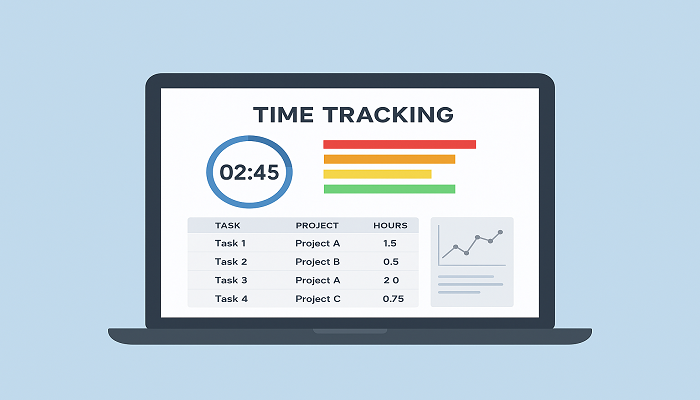
That’s where time tracking software changes everything. By capturing real-time work data and delivering actionable insights, time tracking tools empower teams to make smarter resourcing decisions. Below, we explore five key ways time tracking software dramatically improves resource allocation—helping businesses work smarter, operate more efficiently, and grow sustainably.
Table of Contents
Toggle1. Clear Visibility into Where Time Is Spent
The most fundamental benefit of time tracking software is visibility. When employees log their work hours by task, project, or client, managers gain an accurate breakdown of how time is being allocated. This allows you to answer critical questions such as:
-
Which tasks take up the most time?
-
Are team members spending time on priorities or low-value activities?
-
Are certain projects absorbing more hours than originally estimated?
Without this data, resource allocation becomes a guessing game, often resulting in overstaffing, understaffing, or inefficient workflows.
Clear visibility leads to more informed decisions. For example, if a marketing team notices hours spent on content revisions are excessively high, managers can allocate additional editing resources or improve processes. If a development team is spending too much time fixing bugs, it may signal the need for better testing resources earlier in the pipeline.
In short, time tracking shines a light on how work is distributed, enabling optimized resource allocation based on facts instead of assumptions.
2. Improved Workload Balancing Across Teams
An unequal workload is one of the biggest operational inefficiencies. When some employees are overwhelmed while others are underutilized, productivity drops and job satisfaction suffers.
Time tracking software gives real-time insight into workload distribution. Project managers can quickly see who is working at full capacity, who has extra bandwidth, and which teams may need additional support.
This leads to several benefits:
-
Preventing employee burnout: Avoid overloading top performers by redistributing work more evenly.
-
Better use of talent: Underutilized resources can be reassigned to high-priority tasks.
-
Smarter hiring decisions: Managers can identify when more staff is needed instead of relying on instinct.
With ongoing visibility, companies can proactively balance workloads before problems escalate. Employees are happier, projects are completed faster, and resources are used more efficiently.
3. Accurate Project Forecasting and Capacity Planning
Forecasting is essential to successful resource allocation. Organizations need to know how much time future work will require, whether they have enough staff to complete it, and how to allocate those resources most effectively.
Time tracking software uses historical data to support accurate predictions. When you understand exactly how long previous projects took and which resources were involved, you can estimate future work with confidence.
Here’s how time tracking improves forecasting and planning:
-
Better time estimates: Historical hours help build realistic project schedules.
-
More accurate budgeting: Tracking labor costs provides clarity for future financial planning.
-
Capacity insights: You can determine whether existing staff can handle upcoming workloads or whether outsourcing or hiring is needed.
Instead of starting from scratch each time you scope a project, time tracking allows you to forecast based on proven evidence. That leads to more strategic use of resources and fewer last-minute surprises.
4. Enhanced Productivity and Operational Efficiency
Time tracking doesn’t just improve planning—it actively boosts productivity. When employees know their time is being tracked, they become more aware of their habits, focus more on high-priority work, and reduce time wasted on unproductive activities.
Better efficiency leads to stronger resource utilization in several ways:
-
Process improvements: Bottlenecks become obvious when certain tasks consistently take longer than expected.
-
Task prioritization: Teams can identify which work deserves the most attention.
-
Elimination of unnecessary tasks: Managers can remove or automate work that consumes time without delivering value.
Additionally, time tracking promotes accountability. Everyone understands how their work impacts the team and how every hour matters. As productivity rises, organizations can do more with the same resources—maximizing output without increasing costs.
5. Better Reporting and Data-Driven Decision Making
Data-driven decision making is no longer optional—it’s essential for staying competitive. Time tracking software generates detailed, real-time reports on resource usage, productivity trends, project performance, and team capacity.
These insights help leaders make informed decisions such as:
-
Which projects require more resources?
-
Which tasks should be outsourced?
-
Which employees need training or support?
-
Which workflows need improvement?
Without accurate reporting, decisions are based on intuition—which may lead to costly mistakes. Time tracking transforms data into actionable intelligence, resulting in smarter allocation of human, financial, and operational resources.
Reporting also fosters transparency. Teams and stakeholders can easily understand where time is invested, how projects are progressing, and whether workloads are realistic. This builds trust and alignment across the organization.
Putting It All Together: Smarter Work, Better Results
Time tracking software is far more than a digital timesheet. It is a strategic tool that drives efficiency, productivity, and profitability by empowering organizations to allocate their resources wisely. With clear visibility, balanced workloads, accurate forecasting, improved efficiency, and data-driven insights, businesses are able to operate at their full potential.
In an increasingly competitive landscape, effective resource allocation is a key differentiator. Companies that understand how their time and people are being used can respond faster, reduce costs, optimize planning, and deliver higher-quality results.
Investing in time tracking software doesn’t just improve project management—it transforms the way you work. It helps teams collaborate better, eliminates bottlenecks, and creates a culture of transparency and accountability. Ultimately, it ensures your most valuable resources—your people and their time—are used in the smartest and most impactful way possible.
If you’re seeking to improve productivity, efficiency, and resource allocation, adopting a quality time tracking solution is not just a good idea—it’s a strategic necessity.